How to Choose the Right Spinnerbait for Fall Bass

Fall is one of the best times of year to catch largemouth bass on a spinnerbait. Bass are feeding heavily as they prepare for winter, but that doesn't necessarily mean they are easy to catch. As water cools and fishing pressure increases, bass can become surprisingly selective.
The key to consistently catching fall largemouth on a spinnerbait is understanding water clarity, blade selection, skirt color, spinnerbait size, depth, and how you work the bait around cover.
For me, the biggest factor in choosing a fall spinnerbait is simple:
Read the water clarity first. From there, everything else starts to fall into place.
How to Choose the Right Spinnerbait
There are a lot of spinnerbait combinations available, but you don't need to carry every possible combination in your boat.
When fall arrives, I focus on a few key things:
- Water clarity
- Blade configuration
- Blade size
- Skirt color
- Spinnerbait weight
- Fishing depth
- Cover
- Line size
Getting those things right can make a major difference, especially when you're fishing pressured bass.
Dirty Water: Colorado + Willow Combination
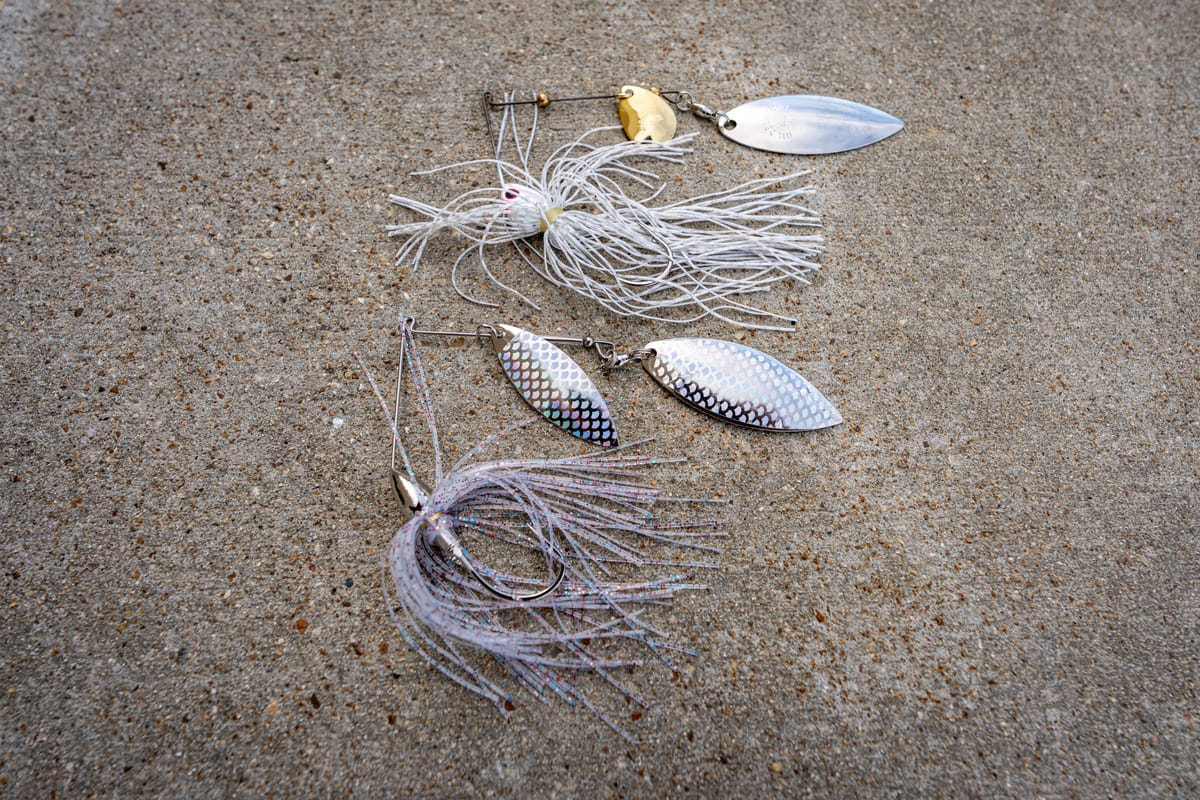
When the water is dirty, I like to use a silver willow-leaf blade paired with a gold Colorado blade underneath it. Don’t ask me why I think this combination over others, but just trust me it is deadly.
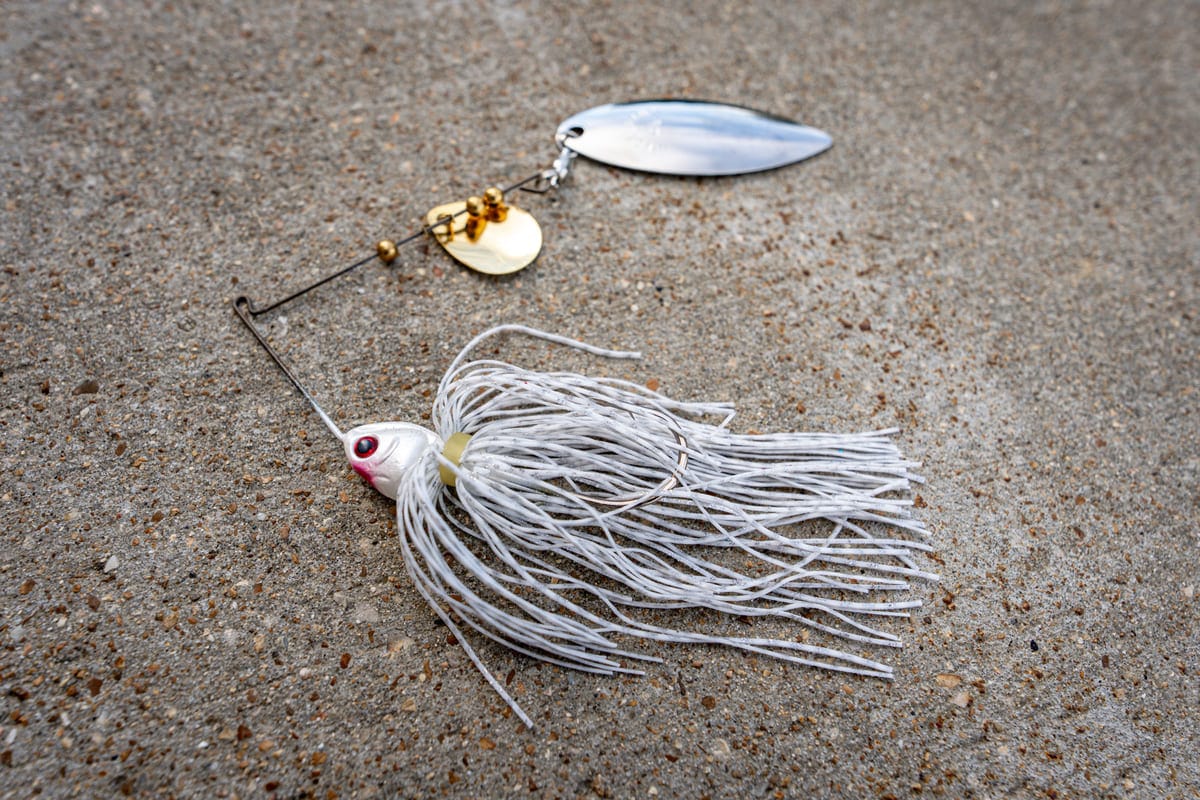
The Colorado blade provides additional vibration and helps the bass locate the bait when visibility is limited. The silver willow leaf adds flash without completely eliminating the vibration you're looking for. This combination is particularly effective when bass can't see the spinnerbait from a long distance. When the water is dirty, don't be afraid to give the bass something they can both feel and see.
Clear Water: Double Willow
When the water clears up, I switch to a double willow-leaf spinnerbait. But there is an important detail that I think gets overlooked: Go smaller with your willow leaves.
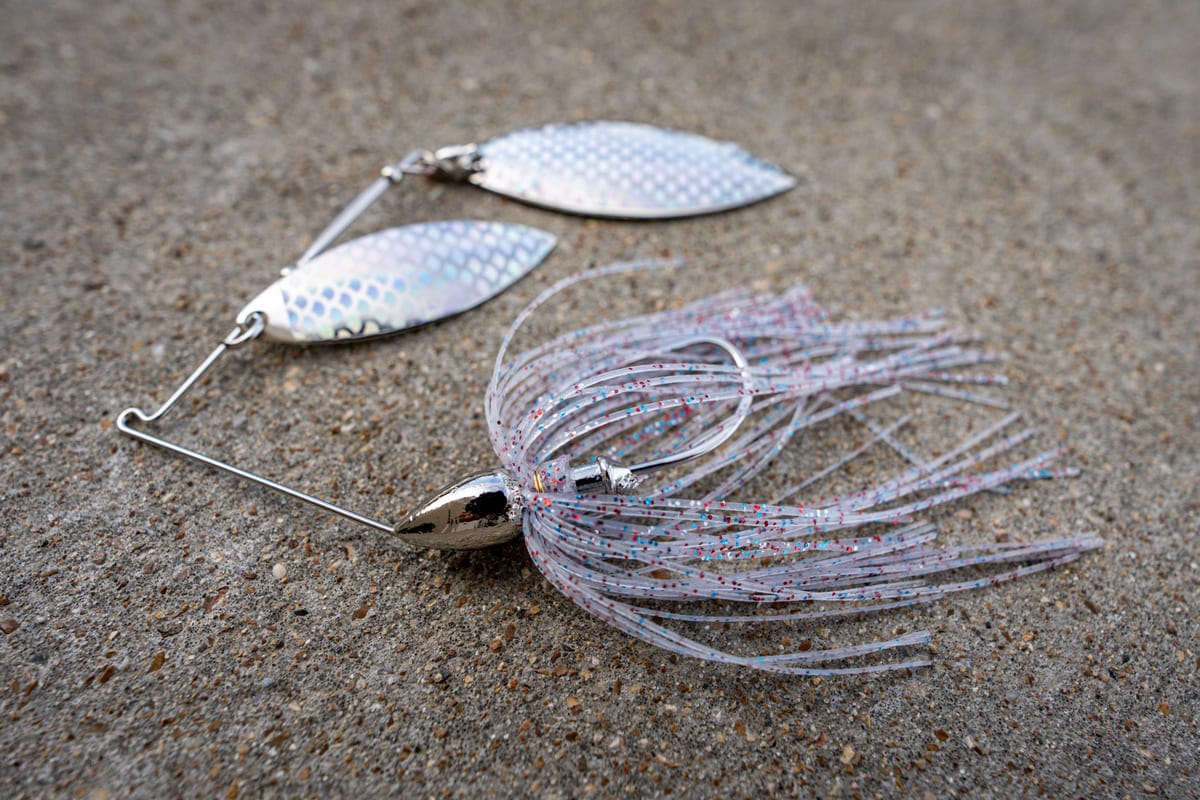
In clear water, especially during the fall, bass can get extremely wary. Smaller willow leaves create a more subtle presentation while still producing the flash of a small baitfish. Fall bass are often feeding on smaller forage, and those smaller blades can help make your spinnerbait look much more natural. The smaller profile can also be extremely effective on pressured fish that have already seen plenty of traditional spinnerbaits.
Skirt Color Matters
Blade selection isn't the only thing that changes when the water gets clear. Your skirt color is important, too.
When I'm fishing clear water for fall largemouth, I almost always want a glimmer blue, translucent skirt. The goal is to make the spinnerbait look like a small baitfish rather than a large, obvious object moving through the water.
In clear water, I want the bass to see flash and a natural-looking profile without giving them a reason to turn away. Clear water + smaller willow blades + a glimmer blue translucent skirt is one of my go-to combinations for fall largemouth.
Always Use a Trailer Hook
If there is one piece of advice I'd give anyone fishing a spinnerbait for fall bass that doesn’t have the above mentioned skirts and blades, it's this: Always use a trailer hook.
Fall bass can be extremely wary and they don't always completely commit to a spinnerbait. A bass may swipe at the bait, barely get the spinnerbait in its mouth, or hit the back portion of the bait instead of completely eating it.
That trailer hook can turn a missed opportunity into a landed fish. And missing a bass on a spinnerbait in the fall can be especially frustrating because a lot of times you won’t get another chance.
A lot of times, once a bass reacts to your spinnerbait, that's your only opportunity. You can't always throw right back into the same spot and expect that fish to fire again. That's why I don't take any chances with a trailer hook.
Spinnerbait Weight
Spinnerbait size and weight should be determined heavily by the depth you're fishing. For fall largemouth, I typically break it down like this:
- 0 to 4 feet: ⅜ ounce
- 4 to 10 feet: ½ ounce
- 10+ feet: I’m rarely fishing that deep but if I am I would be ¾ to 1 ounce.
For water from the surface down to about four feet, I typically won't go much smaller than a 3/8-ounce spinnerbait. When I'm fishing from roughly 4 to 10 feet, I'll move up to a 1/2- or 3/4-ounce spinnerbait in some scenarios.
There usually isn't much reason for me to fish a spinnerbait significantly deeper than that when targeting fall largemouth. There is an exception, though: Deep Spinnerbaits for Highland Reservoir Smallmouth
If you're targeting highland reservoir smallmouth, you can absolutely take the same concept deeper. In that situation, I'll go as large as an ounce and use the heavier spinnerbait to target deeper fish. The important thing is to match your spinnerbait weight to the depth and speed you're trying to fish.
Upsize Your Line
Fall spinnerbait fishing can involve making a lot of casts around heavy cover. You're often looking for bass around:
- Brush
- Laydowns
- Trees
- Stumps
- Creek-channel cover
- Shallow flats
- Other ambush points
Because of that, I don't see much reason to go light on your line. For largemouth, I'll typically use 17- to 20-pound fluorocarbon. Line size doesn't matter nearly as much as some anglers think it does with a spinnerbait. I'd rather have heavier line and be able to horse a big largemouth out of heavy cover than hook a fish on 10- or 12-pound line and worry about bringing him to the boat.
Plus with 17- to 20-pound fluorocarbon I’ll just boat flip anything any bass 4 ½ pounds. I want to reel them in quick and get them in the boat, because I said before these bass are just reacting so you have no idea how deep that hook is actually in. For me, fluorocarbon is a must for this technique.
Monofilament has significantly more stretch, and that can become a problem when a bass eats your spinnerbait and immediately turns toward a brush pile or tree. With a spinnerbait, you need to be able to drive the hook home and control the fish once it gets into cover. That's why I prefer heavier fluorocarbon.
Best Rod and Reel for Fall Spinnerbait Fishing
You don't need an overly specialized setup to fish a spinnerbait effectively. I typically use a medium-heavy rod between 6'10" and 7'2". The length I choose depends on how I'm fishing.
6'10" Medium-Heavy Rod
When I'm fishing close quarters around brush and trees, especially in tight creeks, I prefer a 6'10" medium-heavy rod. The shorter rod gives me more control when I'm making shorter casts and working a spinnerbait through tight cover.
7'2" Medium-Heavy Rod
When I'm fishing a flat with scattered cover or trying to make long casts, I'll go with a 7'2" medium-heavy. The additional length helps me launch the spinnerbait farther and gives me more control over the bait during a long retrieve.
Reel Gear Ratio
I don't think reel speed is extremely important for fall spinnerbait fishing. Anything from roughly 6.6:1 to 8.5:1 gives you plenty of speed. A lot of the time, I'm watching the spinnerbait as it comes through the cover anyway, so I'm controlling the bait with my eyeballs on the retrieve rather than simply relying on the reel's gear ratio.
How to Fish It
One of my biggest goals when fishing a spinnerbait in the fall is to keep the bait high in the water column. A lot of the time, I want to see the spinnerbait working just underneath or almost on top of the surface. Why?
Because I'm trying to trigger a reaction. The higher you keep that spinnerbait, the more water the bass has to cover to come get it. That creates a high-speed chase that triggers an aggressive reaction. Instead of slowly crawling a spinnerbait through the water column, I'll often burn it along and make the bass decide quickly whether it's going to eat.
When to Slow Down Your Spinnerbait
That doesn't mean you should always burn a spinnerbait. There are times when slowing down is critical. If you know bass are positioned around specific cover, slow down and pick the cover apart.
I'll intentionally make contact with:
- Trees
- Logs
- Brush
- Stumps
- Rocks
- Other pieces of cover
Don't be afraid to beat your spinnerbait off the cover. Sometimes that deflection is exactly what triggers the bite. The key is recognizing when you're in search mode versus fish mode.
Search Mode
One of my favorite things about a spinnerbait in the fall is that it can be used as a search bait. You don't necessarily have to spend 10 minutes dissecting every piece of cover when you first arrive. Instead, put your trolling motor on high and cover water quickly. Look for areas where you know there is bait and start fishing the cover.
You're trying to answer one question: Are the bass here?
Once you get a bite — or even get a bass to react to the spinnerbait — that's when I change gears. I'll move another 100 yards and continue fishing, but now I'll slow down and thoroughly pick apart the cover. Then I'll come back through the original area and fish it from a different angle.
Change Your Casting Angle
Changing your angle can be one of the easiest ways to catch additional bass from the same piece of cover. A bass that ignored your spinnerbait coming from one direction may react when the bait approaches from another. This is especially important around isolated cover.
For example, you might catch one bass from a tree and assume you've caught everything there. Instead, come back through from a different direction. Your spinnerbait may approach the tree from a completely different angle, giving another bass a different look at the bait.
This is one reason I like using a spinnerbait as both a search bait and a precision bait.
Final Thoughts
Fall spinnerbait fishing comes down to matching the bait to the conditions. Start with water clarity, choose your blade combination and skirt color, then match the weight to the depth you're fishing.
Keep your bait high when you're trying to trigger a reaction, but slow down and work cover once you've found fish. The smaller willow blades, heavier fluorocarbon, trailer hook, and a different casting angle can make a big difference when you only get one chance at a bass.