Clear Water Bass Fishing Strategies with Caz Anderson

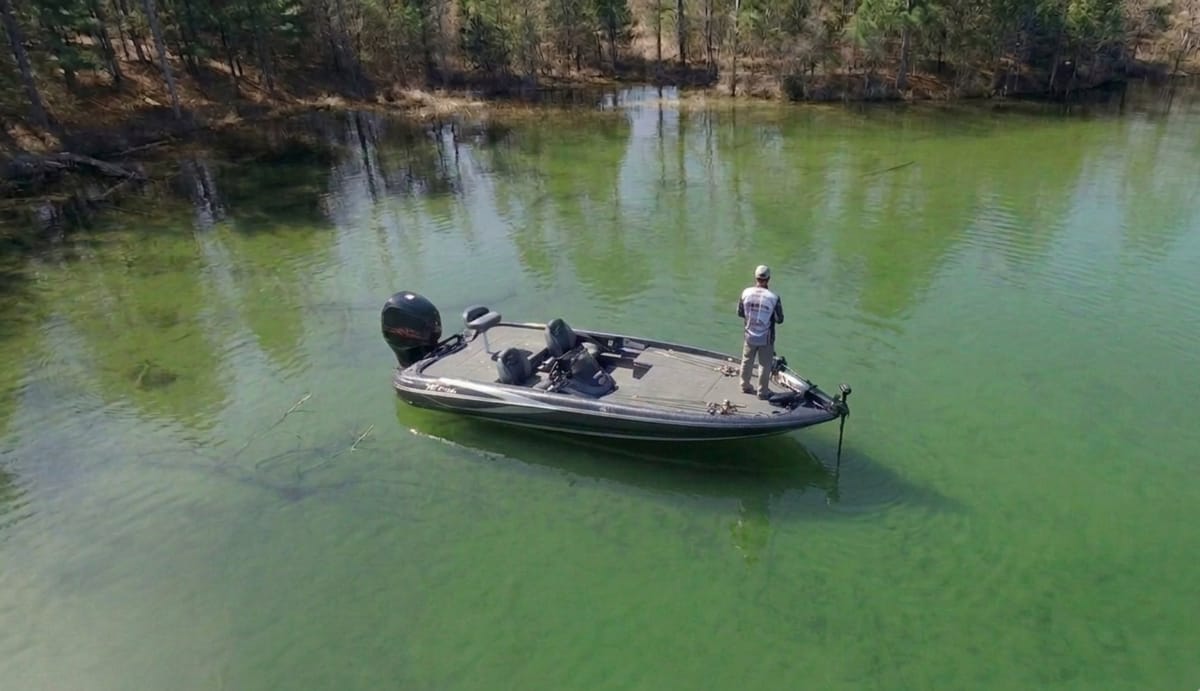
Say the words, “clear as a mountain stream,” and Tackle Warehouse Pro Circuit angler Caz Anderson can tell you all about it. Anderson grew up in the Blue Ridge Mountains in western North Carolina, where those cold, transparent streams eventually form super-clear lakes. Highland impoundments such as Chatuge, Nottely, Burton and Blue Ridge have been his bass fishing stomping grounds for most of his life.
These days, these mountain gems serve as Anderson’s office, where he runs Lake Chatuge Guide Service. Over the years, his home lakes have taught him some valuable lessons about fishing clear water.
Why Clear Water Bass Are So Hard to Catch
“Clear water bass are just smarter,” Anderson says. “Living in a clear-water environment gives them such an advantage in telling real from fake. It’s like they have PhDs in lure recognition.”
Over the years, Anderson has learned many tricks to fool these wise fish, from more realistic lures and lighter lines to longer casts and faster retrieves. Technology has been a big help, too, both in the form of sonar and in the form of faster conditions data at his fingertips.
“Clear-water bass are smartest on those days when the lake is slick, and that bright sun is coming up fast against a clear sky,” Anderson says. “When you’re faced with those conditions, you need something – anything – to offset their advantage of awareness. No matter how small or how slight, if you can find some wrinkle in those conditions, it’s better than nothing.”
Finding High-Percentage Zones Using Wind, Current, and Water Color
To find those creases to counter clear water situations, Anderson consults the Deep Dive app on his phone. The first thing he looks for is the possibility of main lake current with the Outflow History graph to see if and when water is being pulled from the dam.
“That gives me an idea of when they might move some water,” he says. “Current in clear water is definitely a positive in making bass a little more careless.”
From there, Anderson consults the Wave Impacts map to help counter the still conditions in clean water.
“I cannot stress how important wind is in clear water,” Anderson explains. “The slightest ripple can make a huge difference. Deep Dive’s wind maps are incredibly accurate and detailed. The Wave Impacts tool displays how the wind will impact the banks, showing which banks will gather the slightest breeze into a ripple. If there is a ripple on the water, Deep Dive shows it.”
If main lake current is not going to happen, and the afternoon breeze has not picked up, Anderson begins looking at water color changes to help smokescreen bass. Much like wind, just a slight amount of water color can make a big difference. It does not have to be muddy water, or even stained, but just a touch of “hazy green” in a super-blue, clear lake can flick the switch.
Anderson finds this subtle water color change by studying the Water Clarity maps or the Recent Satellite images.
“Both are incredible tools for seeing where that tiny bit of color begins in a lake,” he says. “If the Water Clarity map has been updated within the last two or three days, it is spot on where the color change can be found. Then I’ll take a look at Recent Satellite images and cross-reference the two for those color changes.”
Using Rain and Lake Patterns to Find Clear Water Bass
As a last resort, Anderson turns to the Inflows maps. This tool usually requires some rainfall to make it work. When the small, dry creek beds lining the mountains get enough water to wet the whistle, they turn into dinner bells for bass.
During the summer, he keeps his eye on the radar for thunderstorms to see which basins are receiving the rain, then he studies the inflow maps to see which ones should be active the next day. Sometimes all it takes is a small inflow to create a new water color seam to attract baitfish and bring in bass.
Some tools are more potent than others, based on the lake.
“It’s fun to mix and match the different Deep Dive functions with the lakes I visit,” he adds. “I might not use all the tools all the time, but at least one or two of the functions are extremely valuable on each lake I visit.”
“For example, Lake Lanier is a clear-water lake that has stained water in the upper ends,” he continues. “But the bass on the lower end are much more influenced by current and wind, so I rely on Outflow History and Wave Impacts the most at Lanier.
“Chatuge and Douglas don’t have much current created by the dams, so I chase the wind and water color with Wave Impacts Water Clarity maps. The Water Inflows map is also pretty effective on Douglas.”
Anderson realizes Deep Dive is not a magical cure-all that solves all clear water challenges. But he is amazed at the number of possible options that it opens up.
“When I study Deep Dive for a few minutes and think: it looks like we are going to get a little east wind on these points starting at noon, or, it rained on this side of the basin last night, so these run-ins should be flowing today, it gives me some more leads to try. When I act on those leads, and it works out to produce a few more bass that I would have never caught otherwise, it’s pretty dang cool.”