Bad Practice? Turn Tough Conditions Into a Tournament Win

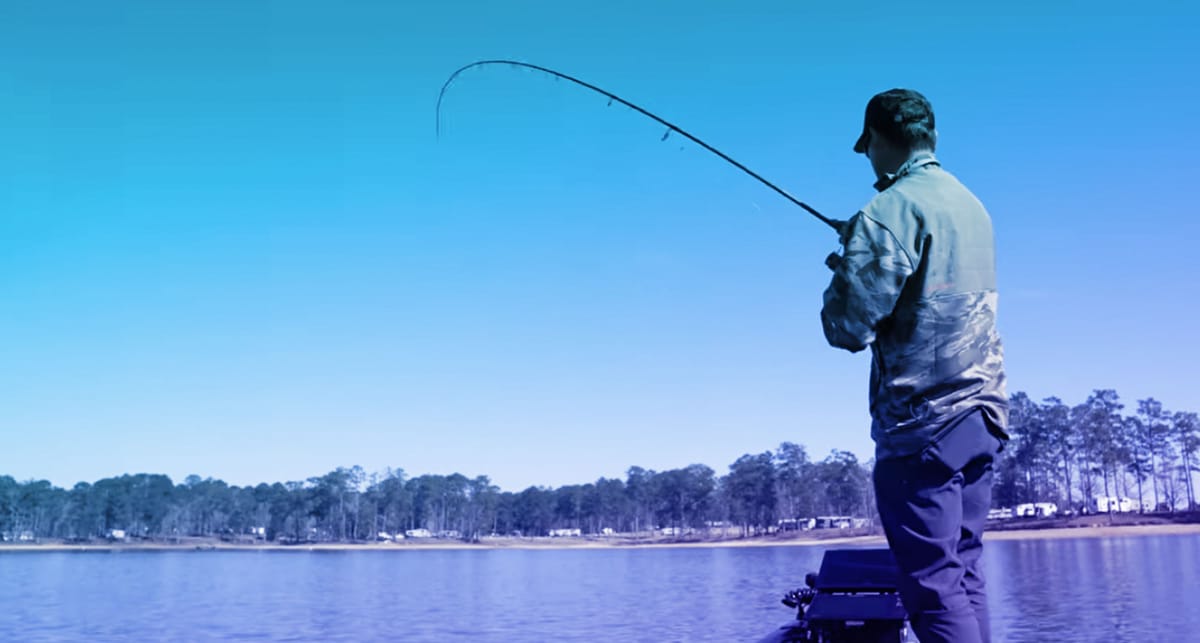
Yes, they happen: bad tournament practices. They actually happen more often than not. Many bad practices can be attributed to wicked weather conditions with high winds, nasty storms, torrential downpours, and high water being the usual suspects.
Some bad practices are due to equipment issues that cost valuable time to resolve.
Then there is the straight-up “terrible practice” where daylight-to-dark for two or three days renders nothing – not even a solid keeper.
The good news is that many major tournaments have been won on the heels of bad practices. The common denominator in those wins was throwing everything out the window from official practice and finding a sudden condition change to capitalize on during the tournament.
Maybe high winds thrashed the lake during practice, then suddenly subsided or shifted before day one. Maybe intense thunderstorms doused the last day of practice. Maybe muddy water made a lot of the best creeks unfishable in practice. Maybe there was no current in practice.
If some adverse condition made water unfishable in practice, look for the silver linings in the seams of those conditions and take advantage of them. The first place to look for developing creases in the conditions to right the ship is the Deep Dive app. Deep Dive provides a master console of multiple variables and conditions that anglers can monitor at all times. When conditions shift, these tools can help turn a bad practice into a great tournament.
Four Deep Dive Tools That Can Save Your Tournament
Wave Impacts
For starters, if wind has been the nemesis of your practice, you are in luck. Experienced pros relish harsh winds that thrash some of the best banks of a popular tournament lake during practice. When such winds “blow out” a bank or shoreline, many competitors will write those areas off for the tournament. That’s when savvy pros grin a little because they know when the wind subsides or shifts, that “unfishable” bank will quietly open up.
This is especially true in flat vegetative lakes like those found in Florida and Texas. When hard winds blow into flats, they often push the roiled, turbid water into the flats, shutting the fish down. However, once the wind shifts around and starts blowing back out, it pushes clean water from marshy areas back out onto the edge of the flat, and the bite fires back up on a dime.
Deep Dive’s Wave Impacts Map is the best wind app for lakes because it was designed for anglers. In addition to wind speed and direction, the Wave Impacts tool also factors in wind interaction with the land terrain to help illustrate protected wind shadows and longer fetches that build bigger waves. This feature is both historical and predictive, showing which banks got thrashed by wind over the last two days and the wind forecast for the next seven days.
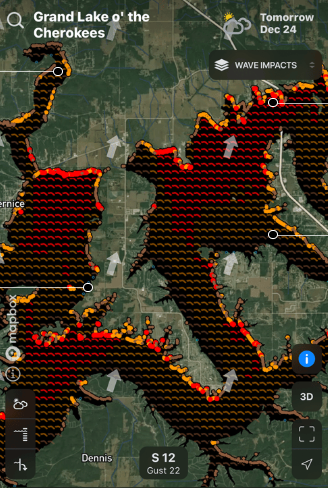
This is a deadly tool in finding wind changes that create bite windows. Maybe a lake has been stuck in the still, slick doldrums over a few days, but in two days, a brisk 10 to 15 mph wind is coming to freshen the bite. If the wind has been heavy for a few days in practice, but it’s predicted to subside or shift, some areas will clean up during the tournament.
Water Inflows
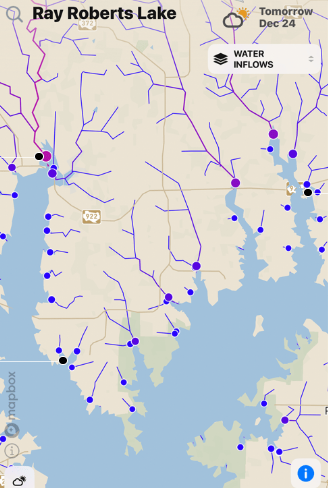
If vicious thunderstorms and torrential downpours run you off the lake in practice, it’s time to pull up the Water Inflows Map. This is especially helpful on clear, highland impoundments with numerous small drainages and dry creek beds that only flow with plenty of rainfall. These dynamic little rivulets can be dry for weeks, but get a few big thunderboomers in a row, and they become untapped water flows into the lake. Especially out on the main lake, where the water is the clearest. When these glorious bite windows open in tournament hours, it’s a great way to recover from a bad practice.
Outflow History
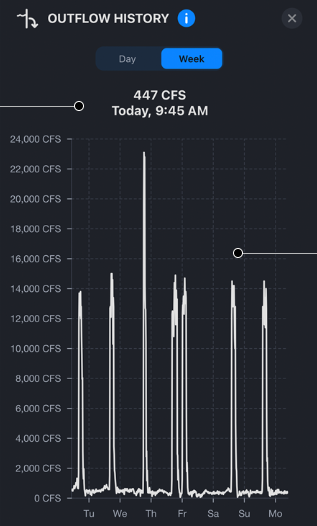
If floods and high water have washed out practice, keep an eye on the Outflow History and Water Level graphs. If they open the dam gates and start pulling the water back down hard, chances are fish will begin retreating out of the woods and back to the old bank line. This opens up strong falling-water patterns that were not available in practice.
Generation Releases
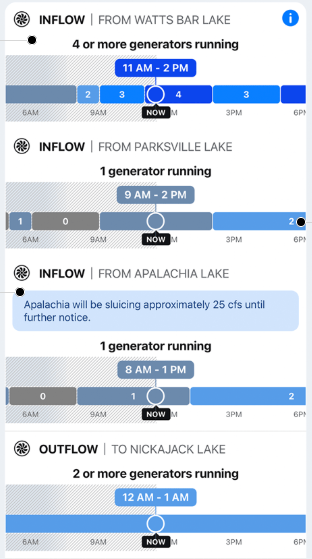
If a lack of current made practice stingy, the Generation Releases tool can be the bearer of good news. Generation Releases primarily apply to TVA and Alabama Power Lakes, providing projected generation information for the next 24 hours. If things have been stagnant for a few days of practice, and there is generation scheduled for the first day of the tournament, things can turn around fast.
Bad practices don’t have to mean bad tournaments. Deep Dive’s host of condition-monitoring tools can help pinpoint a sudden or subtle change in conditions to right the ship when the green flag drops.