Best Fishing Lakes in Georgia

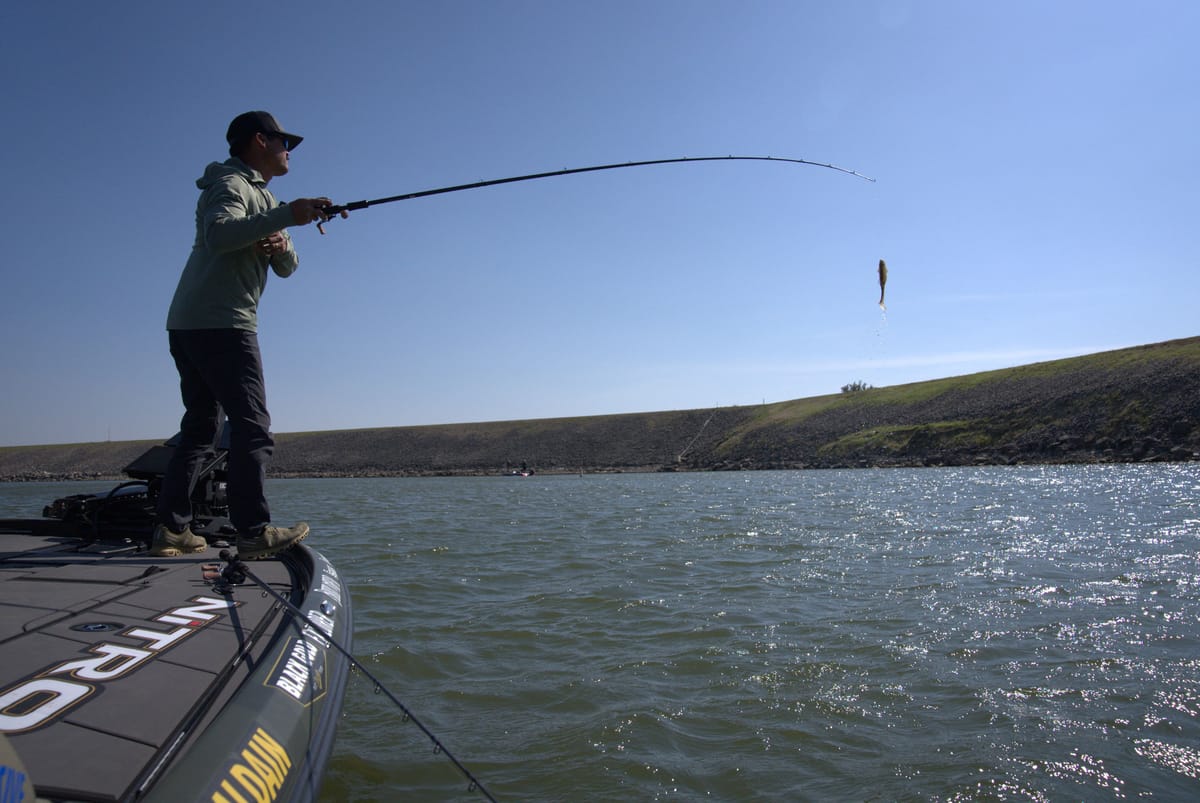
Georgia is packed with bass fishing opportunities—but finding consistent fish isn’t always easy.
With thousands of acres of reservoirs, river systems, and backwater pockets, it’s easy to spend an entire day casting at spots that look good but don’t actually hold fish. The challenge isn’t finding water—it’s knowing where bass are positioned right now based on structure, bait, and conditions.
From deep, clear lakes to more stained, river-style systems, Georgia offers a wide range of fisheries with largemouth and spotted bass, along with striped and hybrid bass in many lakes. But each one fishes differently, and success comes down to understanding how bass use channels, points, flats, timber, and current throughout the year.
In this guide, we break down five popular Georgia lakes and show how to use Deep Dive’s map layers to find active fish, eliminate unproductive water, and make your time on the lake more efficient.
Top 5 lakes to fish in Georgia
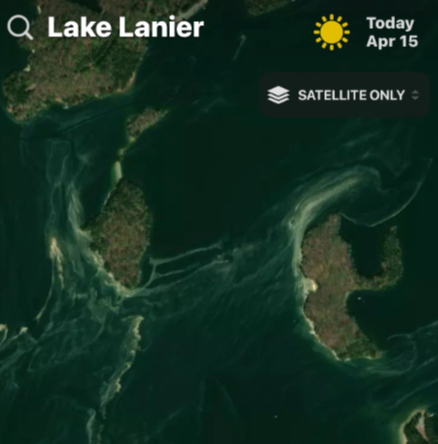
Lake Lanier
Why It’s Popular: Lake Lanier is one of the most consistent bass fisheries in Georgia, covering roughly 38,000 acres along the Chattahoochee River and supporting strong populations of both largemouth and spotted bass, along with striped bass, crappie, catfish, and bluegill. The lake features deep main-lake channels, long tapering points, flats, submerged timber, and thousands of man-made brush piles that create year-round holding areas, much of which is not visible from the surface. Bass frequently suspend in open water to feed on blueback herring, making positioning and depth control more important than simply casting to visible cover, and with heavy fishing pressure from both recreational anglers and tournaments, success depends on dialing in exact locations.
Fish Species: Largemouth Bass, Spotted Bass, Striped Bass, Crappie, Catfish, Bluegill
Seasonal Conditions: In spring, bass move shallow along flats, points, and timber edges to spawn, feeding where baitfish concentrate over gradual depth changes. Summer pushes fish deeper to humps, brush piles, and shaded structure where they hold tight and require precise presentations. In fall, bass follow bait across points, flats, and suspended structure, with wind often triggering the most active feeding. In winter, fish concentrate deeper along channels, ditches, and timber, grouping tightly and responding best to slower presentations.
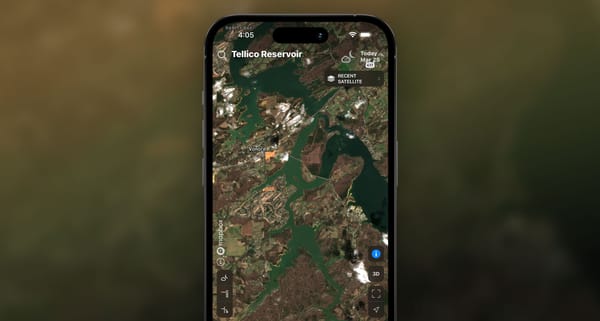
Deep Dive Pro Tip: On Lanier, bass group tightly on small, specific pieces of structure. If you’re not targeting exact spots, you’re likely fishing over empty water. Focus on isolated brush piles, timber edges, and subtle depth changes where fish can hold near bait. Use the Recent Satellite Map to find these hidden targets so you can fish precise areas instead of covering empty water.
Lake Allatoona
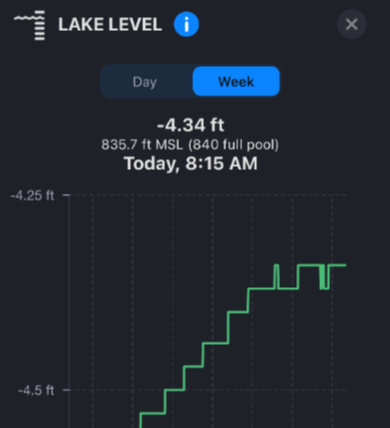
Why It’s Popular: Lake Allatoona covers about 12,000 acres on the Etowah and Little Rivers and is one of Georgia’s most accessible fisheries. It holds largemouth and spotted bass, along with hybrid bass, crappie, catfish, and bluegill. The lake features a mix of deep channels, flats, points, rock ledges, and submerged timber. Water levels fluctuate significantly, often more than 10 feet each year due to rainfall and Corps of Engineers dam operations. These changes reposition fish based on current, temperature, and available cover. Its proximity to Atlanta makes it a high-pressure fishery, and bass can become selective. Success comes from understanding how wind, water movement, and structure position fish rather than relying only on what you can see.
Fish Species: Largemouth Bass, Spotted Bass, Hybrid Bass, Crappie, Catfish, Bluegill
Seasonal Conditions: In spring, bass move shallow from channels into flats and points to spawn, feeding where rising water and current position baitfish. Summer pushes fish to deeper structure like humps, ledges, and bridge pilings where they hold tight and respond best to slower presentations. In fall, bass follow bait into the backs of creeks, especially when water movement positions bait along banks and secondary points. In winter, fish hold deeper along channels and rock structure, where they group up and stay close to stable water.
Deep Dive Pro Tip: Pay attention to water level changes on Lake Allatoona as this can impact where the fish are. When water level is rising, bass often move shallow with it and use newly flooded cover. When it’s falling, they pull back to deeper channels, ledges, and more stable structure. Check out the Lake Level feature to track these changes so you can quickly adjust and stay on the fish.
Clarks Hill Lake (J. Strom Thurmond Reservoir)
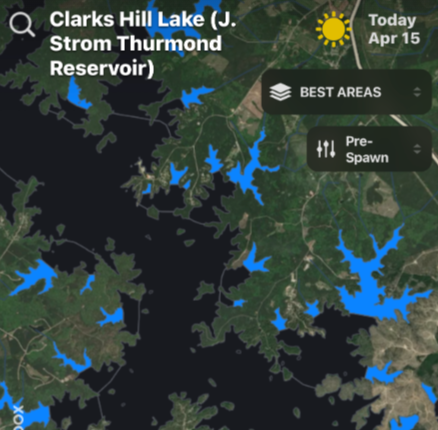
Why It’s Popular: Clarks Hill Lake spans over 71,000 acres across Georgia and South Carolina and is known for producing both numbers and quality bass. It supports largemouth and spotted bass, along with striped bass, crappie, catfish, and bluegill. The lake features deep channels, long points, expansive flats, and flooded timber, along with offshore structure that holds fish throughout the year. Its size and variety give anglers multiple ways to pattern fish, but without a plan, it can feel overwhelming. Fish positioning is heavily influenced by seasonal movement and bait, and large sections of the lake can fish completely differently depending on conditions. As a result, some areas consistently produce while others can feel empty.
Fish Species: Largemouth Bass, Spotted Bass, Striped Bass, Crappie, Catfish, Bluegill
Seasonal Conditions: In spring, bass move shallow to spawn along points, flats, and timber edges, often feeding aggressively during baitfish spawns. Summer pushes fish deeper to offshore structure like humps, ledges, and submerged timber. In fall, bass follow bait along points, flats, and wind-blown banks. In winter, fish concentrate along deeper channels and structure, where they group up and stay in more stable water.
Deep Dive Pro Tip: Clarks Hill is too large to fish without narrowing your focus. Start by identifying a specific section of the lake that fits the current season and conditions, then break it down into points, channels, and nearby structure. Use the Best Areas Map to quickly eliminate low-percentage water and focus on sections of the lake that consistently hold active fish.
Lake Sinclair
Why It’s Popular: Lake Sinclair is a 15,000-acre reservoir on the Oconee River known for its consistent bass fishing. It supports largemouth and spotted bass, along with hybrid bass, crappie, catfish, and bluegill. The lake features a mix of flats, points, submerged timber, rock, and shoreline cover that hold fish throughout the year. Its layout allows bass to move easily between shallow and deeper areas, creating reliable patterns across seasons. Fishing pressure is steady, and bass can become selective. Success comes from understanding how fish position based on depth, structure, and changing conditions rather than focusing on any one type of cover.
Fish Species: Largemouth Bass, Spotted Bass, Hybrid Bass, Crappie, Catfish, Bluegill
Seasonal Conditions: In spring, bass move shallow around flats, timber, and shoreline cover to spawn and feed. Summer patterns push fish toward deeper structure and shaded areas where they hold tight during the heat. In fall, bass follow bait along points and flats, adjusting based on conditions and bait movement. In winter, fish hold deeper along channels and nearby structure where water remains more stable.
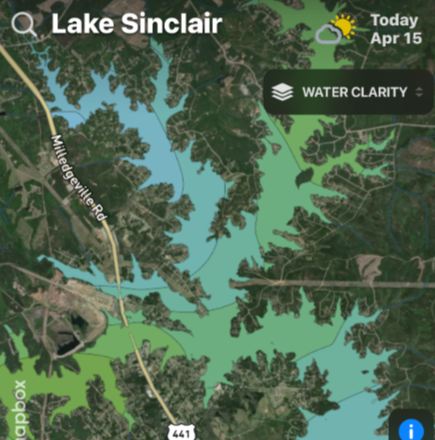
Deep Dive Pro Tip: Water clarity plays a big role on Sinclair and can vary across different parts of the lake. In clearer water, bass tend to hold deeper or tighter to structure, while in more stained water, they often move shallower and feed more aggressively. Use the Water Clarity Map to identify these changes so you can adjust your depth and approach instead of fishing the same way everywhere.
West Point Lake
Why It’s Popular: West Point Lake covers over 25,000 acres on the Chattahoochee River and is a classic river-style reservoir. It holds largemouth and spotted bass, along with hybrid bass, crappie, catfish, and bluegill. The lake features a mix of flats, channels, points, rock ledges, and shoreline cover like blowdowns. Its river influence creates steady current that positions fish and sets up predictable patterns throughout the year. Success comes from understanding how current and structure work together, as bass position around areas where moving water brings bait to them.
Fish Species: Largemouth Bass, Spotted Bass, Hybrid Bass, Crappie, Catfish, Bluegill
Seasonal Conditions: In spring, bass move shallow to spawn around flats, points, and shoreline cover, feeding where current positions baitfish. Summer pushes fish to deeper structure like humps, ledges, and submerged roadbeds, especially when water is moving. In fall, bass follow bait along points and flats, with current often triggering the most active feeding. In winter, fish hold deeper along channels and structure, where they group up and stay close to stable water.
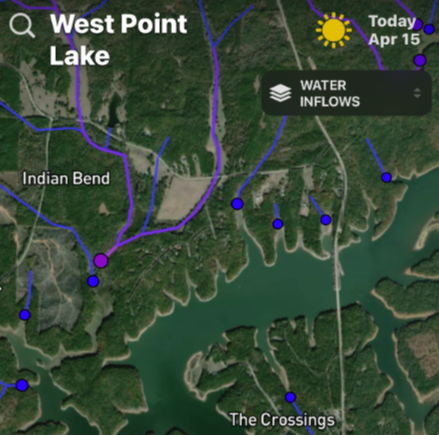
Deep Dive Pro Tip: Current is a key factor on West Point. Focus on areas where moving water positions bait, such as points, channel swings, and structure that breaks current. Use the Water Inflows Map to identify where current is entering the lake so you can target areas where bass are more likely to be active and feeding.
Let Deep Dive be your guide on the water
Make the most of your next trip with Deep Dive. Get the pro tournament data you need to build a clear plan so you can spend more time catching and less time searching. Use real tournament insights and map layers to understand how bass are positioning based on real-time conditions.
Deep Dive helps you break down any lake before you ever launch the boat, highlighting key areas, eliminating unproductive water, and giving you a clearer plan for the day. Whether conditions are steady or changing quickly, you’ll have a focused approach every time you get on the water.
Ready to master your lake?