Chase the Right Wind

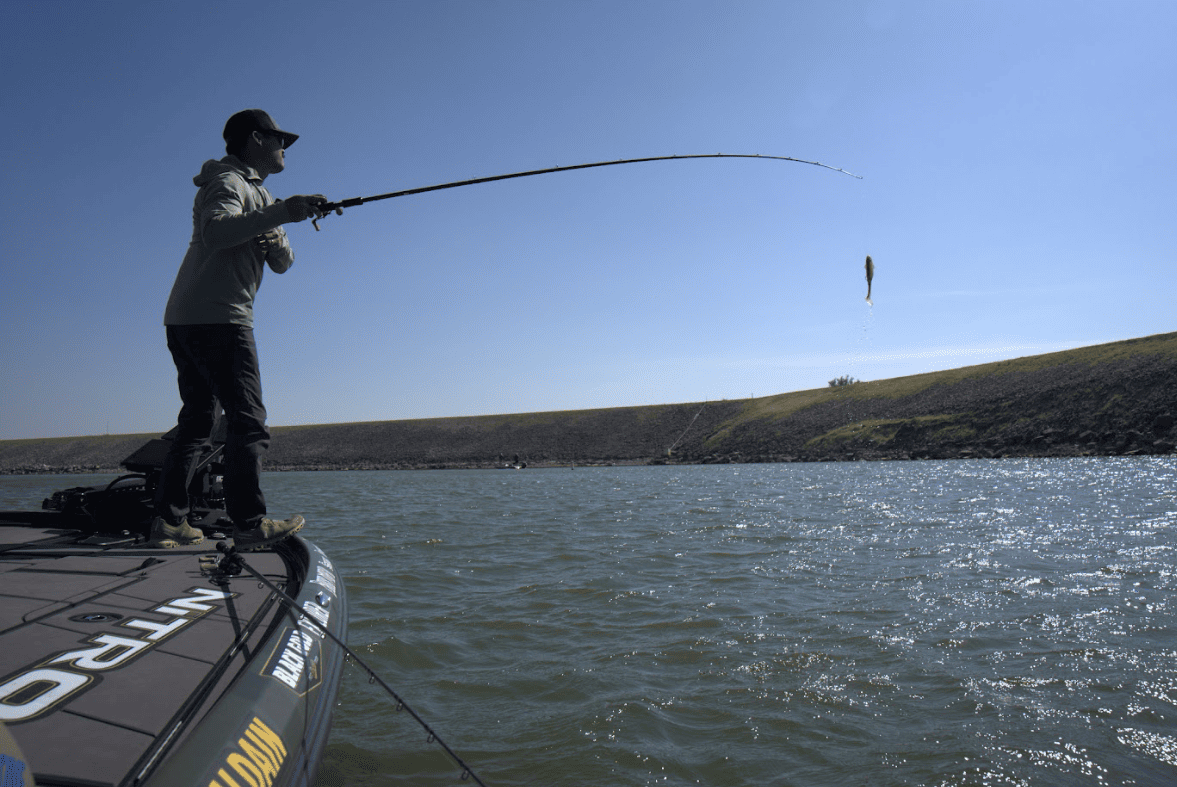
A common statement you might hear from professional bass anglers when breaking down a pattern is that they are “chasing the wind.” While chasing the wind sounds self-explanatory, there are a few subtleties with wind patterns that don’t always come to light with the blanket statement: chasing the wind.
The explanation sounds simple enough: The angler used the wind to their advantage by fishing wind-blown banks or points. But it’s not just about casting at banks where the wind has been blowing in the same direction and speed for hours or days. Chasing the wind has more nuance to it. It’s more about chasing changes or transitions in the wind.
How Wind Affects Underwater Visibility
Snorkeling in clear water on a windy day demonstrates just how different the underwater world looks with each gust that ripples the surface. When it’s dead calm, everything on the bottom is crystal clear – every rock, pebble, crevice, and shadow is crisp, giving bass the advantage in a lure identification program. But when the breeze creates a ripple, the refraction of the light makes wavy shadows that distort the bottom, and things become more mottled. This can help blur lure judgement. Obviously, human eyes are different from bass eyes, but the basic principle is evident: even the slightest surface ripple changes the view of the underwater world. And it’s those small changes in wind, and its effects on the water, that really make chasing the wind a productive pattern.
Fishing the First Wind
An example of true wind transitions is when the wind begins. If the wind has been nonexistent for a day or two, and the bright sun has been beaming straight down into a mirror-calm surface, the water column gets stagnant, especially in early summer. The water stratifies into layers of differing temperatures, water clarity improves, and bass get smarter.
Then that first puff of breeze cascades across the lake, rippling the water’s surface with new life. As the wind increases and becomes more consistent from a particular direction, it pushes farther into bays, around points, and into pockets. It shifts the waters beneath, breaking up stratification and variegating the bottom with refracted light and wavy shadows. This change can be viewed as a kind of “edge” or “seam” in conditions that can make bass more vulnerable.
This is a prime time to chase the wind, as in chase areas that are receiving their first ripples of the day. It’s very similar to the way the first incoming tide is a catalyst for increased fish activity after a prolonged slack low tide. The same thing can be done with wind. It’s possible to chase the first ripple window up a lake as the wind builds and pushes into new areas, bringing a beneficial change in the environment for bass anglers.
Lake Topography and Wind Patterns
In some ways, wind is like water in the way it flows. If water current flows over a flat, sand bay, not many current breaks or eddies are going to exist to hold bait or bass. But if water flows down a tailrace, littered with rocks and boulders, the flow is going to be much more broken, creating eddies and back currents where fish can hide and ambush.
Wind is similar. If it blows over vast, smooth terrain, such as desert or flat land with no relief, then there are no current breaks that cause interruptions to the wind flow.
Varied elevation and steep relief across land is like structure and cover in water, causing turmoil in air currents. Highland impoundments that have steeper terrain like bluffs, valleys, ravines, and hollows will have more volatile air movement across the water. Sometimes a light breeze can be propelled down these corridors, funneling it into a higher velocity wind for more ripple. Winds blowing down Ozark or Appalachian Mountain lakes or TVA reservoirs can be broken and fractured by the terrain, creating wrap-around winds, and vortexes. These wild air mixes from fractured winds can produce ruffled funnels of water rubbing up against calm areas, creating perfect transitions and seams. Patterning these ruffled seams is another form of chasing wind.
Wind Shadows and Calm Water
When there is very little wind, it’s about chasing the new ripple. But at times, the challenge with wind is too much of it. If the whole lake is ripping with wind, then it’s time to chase the developing calm.
In these cases, running wind shadows, or wind voids, created by the lee of wind blocks can be a viable option. Where smooth lees transition into ripples are good places. Also, when a wind shift creates a new lee and rough water begins to calm, that’s a transition area to chase.
Using Wave Maps to Find Wind Transitions
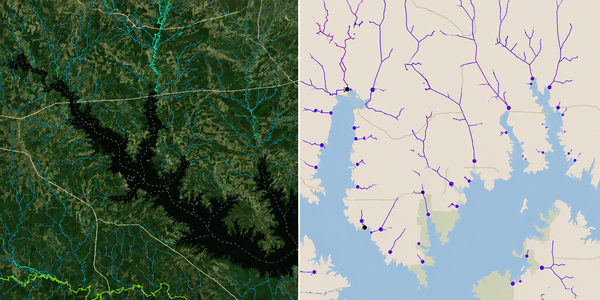
Not too long ago, chasing wind involved riding around large lakes, looking for these particular wind transitions with your eyes. Now, thanks to Deep Dive’s Wave Impacts maps, users can see exactly how the wind is interacting with the terrain across the entire lake from the comfort of a couch.
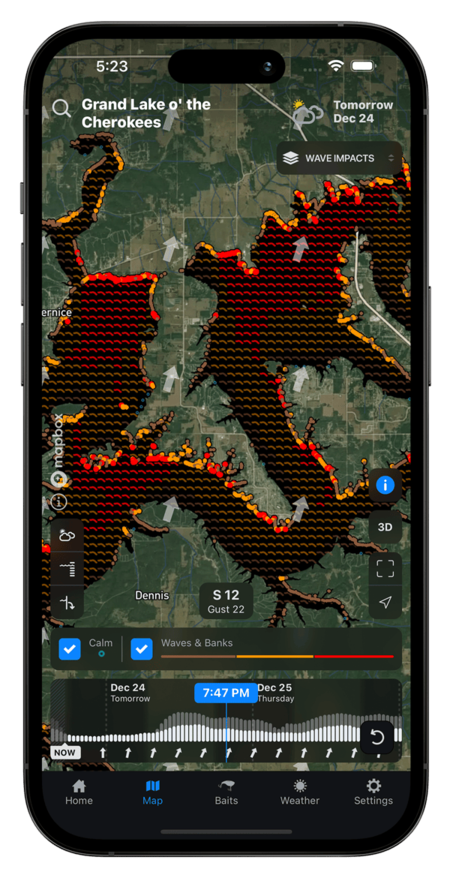
The Wave Impacts maps have been heralded as one of Deep Dive’s most powerful tools due to the accuracy of how the wind influences the surface of the water. The detailed illustration of wave production takes into consideration the lake’s topography relative to the wind’s speed and direction. AI-aided illustrations pinpoint exact areas of calm, light ripple, small chop, and rough water. With such accuracy, you can see the specific wind transitions you want to target.
The Wave Impacts tool even shows how the wind influenced the lake over the past two days and how the wind will impact the lake over the next seven days. You can see what the wind is doing currently, the next day, and several more days after that. This allows users to plan how they want to chase the wind throughout a tournament or a week of fishing.
When you are ready to chase the wind that matters, let Deep Dive’s Wave Impacts be your co-pilot to chase the right wind.