Breaking Down Wind Tides for Bass Fishing

Chris Zaldain relied heavily on his Western roots from the California Delta to capture a 7th-place finish at the Bassmaster Elite Series event at the Pasquotank River in mid-June. Zaldain led day one of the event with an opening limit weighing 25-8. From there, his scorecard included limits weighing 15-2, 20-1, and 16-14 for a four-day total of 77-9.
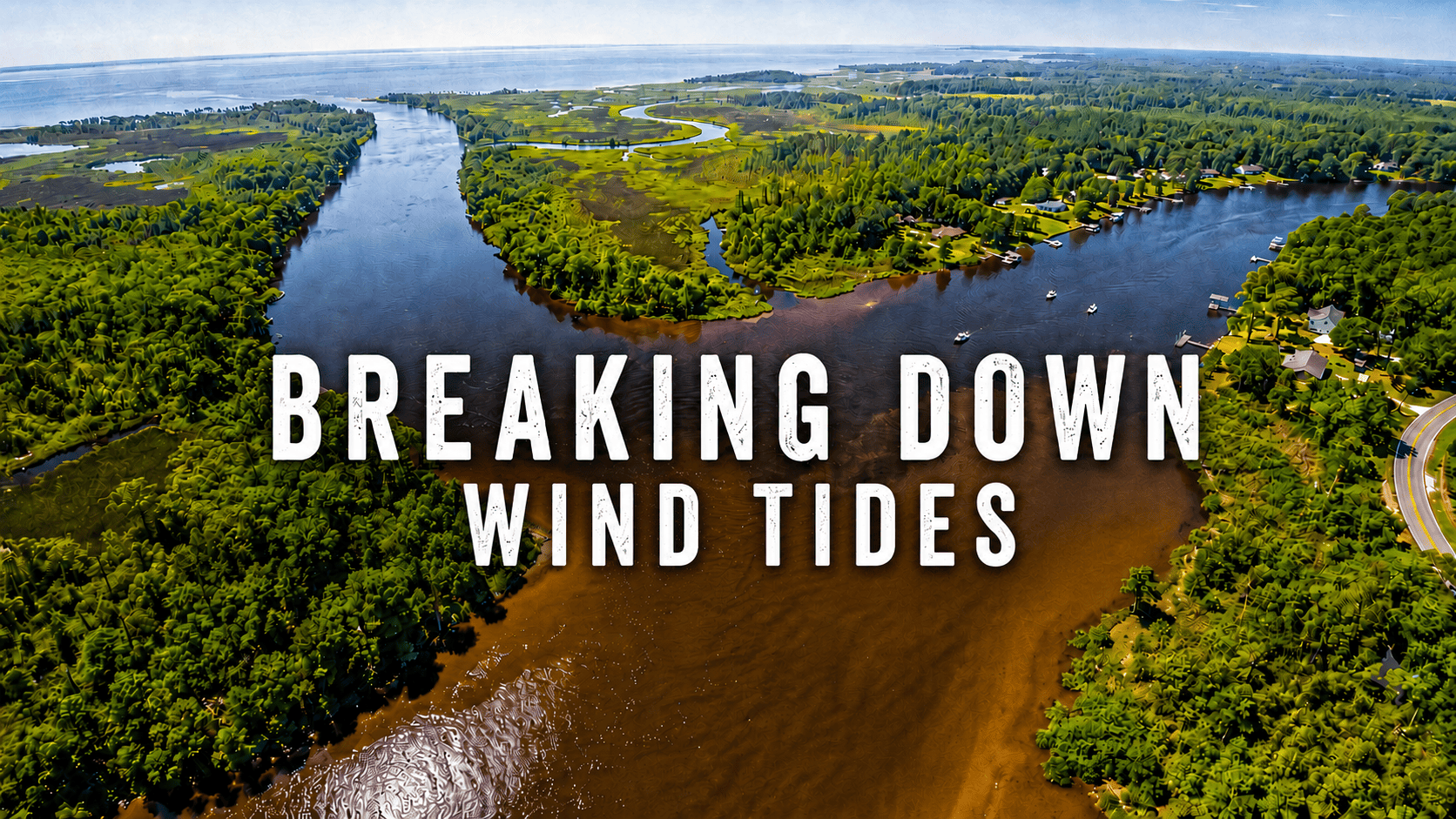
The Pasquotank River is merely a tributary of the massive Albemarle Sound, which is roughly 60 miles long by 15 miles wide. The Pasquotank is considered to be a tidal bass fishery, but its tidal swing is minimal compared to other East Coast tidal fisheries. Whereas the James and Potomac Rivers are regularly capable of tide fluctuations of 2 to 3 feet, the Pasquotank above Camden, NC, is more like 2 to 3 inches.
Understanding Wind Tides vs. Lunar Tides
“The last time we fished the Pasquotank, the thing I learned was that the wind tide usually trumps the regular lunar tide,” Zaldain says. “A big East Coast wind pushing across that giant Sound can push the water some 6- to 10-inches higher, which totally dwarfs the regular lunar tide.”
With that, Zaldain pulled a tidal trick from his West Coast playbook and applied it on the East Coast in the form of running wind tides, like he used to do at the California Delta.
“We’ve all heard of running the regular tides,” Zaldain explains. “You can go to the James or the Potomac and run a true lunar low tide cycle for 30 miles down the river. But wind tides are far less predictable.
“When wind tides trump lunar tides, you have to pay much more attention to the wind direction and speed with Deep Dive’s Wave Impacts map than the regular lunar tides.”
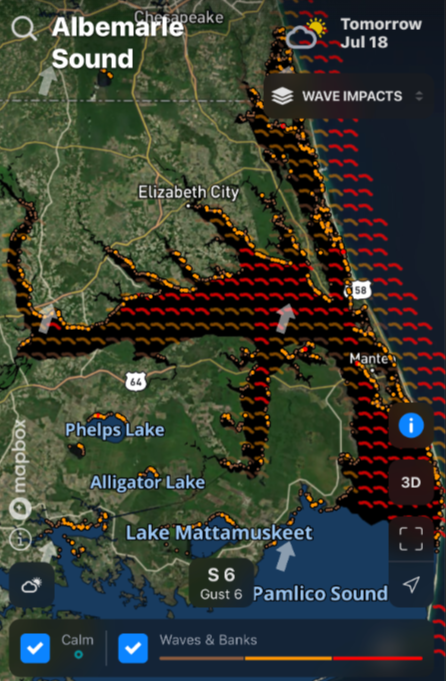
During practice this time around, Zaldain learned that the south wind would pick up in the afternoon and gust through the evening and into the night. But after midnight, that south wind would slowly subside and calm down.
Timing the Outgoing Flow and "Bite Windows"
“If that wind had any kind of south to it, it would pack a bunch of water into the Pasquotank River, and act as a dam, holding back the fresh flow coming down the river,” Zaldain details. “Each morning, I would run up the Pasquotank to a bridge and wait for all that pent-up water to be released from the grip of the south wind.”
Once the wind subsided long enough, water started draining back out of the Pasquotank.
“The current would start ripping, and it created an incredible bite window at the bridge,” he says. “The water flowing out was clear, fresh water and loaded with 5-inch menhaden. It was a total wind tide deal.”
Conditioned to the all-you-can-eat buffet, large Pasquotank bass would set up on the bridge for the fresh flow. And when they did, Zaldain was waiting for them with a 5-inch Daingerous Unloaded swimbait.
“When that window opened, it was incredible,” Zaldain recalls. “They were smashing those menhaden. I tried bigger 6- and 7-inch swimbaits. But all the menhaden were exactly 5 inches long, and those bass were dialed on that size bait.”
The only problem was that this initial feeding melee only lasted about 30 minutes. Good enough for a decent limit, but Zaldain needed more time in that premium window to upgrade. He remedied that by running the wind tide.
Running the Wind Tide to Extend the Bite
“To recreate that window again, I would run down the river several miles and catch that same initial push of fresh water on the second bridge,” he says. “As the current picked up with cleaner water, the push of menhaden would arrive at the second bridge, and I could light them up again on the swimbait for another 30 minutes.”
By keeping an eye on the Wave Impacts map, Zaldain knew when his premium fresh flow was going to stop.
"About mid-morning, the south wind would start to pick back up, and the current in the Pasquotank would begin to slow,” he adds. “I knew the slack period was coming. There was an hour or so when the water was at a standstill, and the bite got tough.”
However, Zaldain remained patient. As the wind picked up during the day, he knew it would push the water to the north and create an incoming wind tide, opening a new bite window. When the current reversed on the bridge pilings, a minor feed would occur.
“The incoming wind tide turn was not as good as that fresh outgoing flow,” Zaldain details. “The incoming water was much more turbid and saltier, but it still increased the bite opportunities over the slack water. Plus, once the sun got high, it tightened up the shade from the bridge, condensing the strike zone considerably, allowing me to be more efficient in targeting that shaded strike zone.”
Once the water was pushing back in hard at the lower bridge, Zaldain would reverse course and run up to the next bridge to catch the wind-tide turn there, too.
“Each time the current reversed on those bridges, it created a bite window,” he says. “So essentially, I had four bite windows per day created by the wind tide: one on each bridge when the fresh water poured out, and one on each bridge when the water pushed back in.
“Once I figured out the whole cause and effect of the wind tides, and how it set those big bass up, it was so much fun. It reminded me of running wind tides on the California Delta years ago. But back then, we only had vague wind predictions; nowadays, we have extremely accurate wind forecasts from Deep Dive, which is a tremendous help in pinpointing wind tide dynamics.”