Rattle battles call for tricky traps

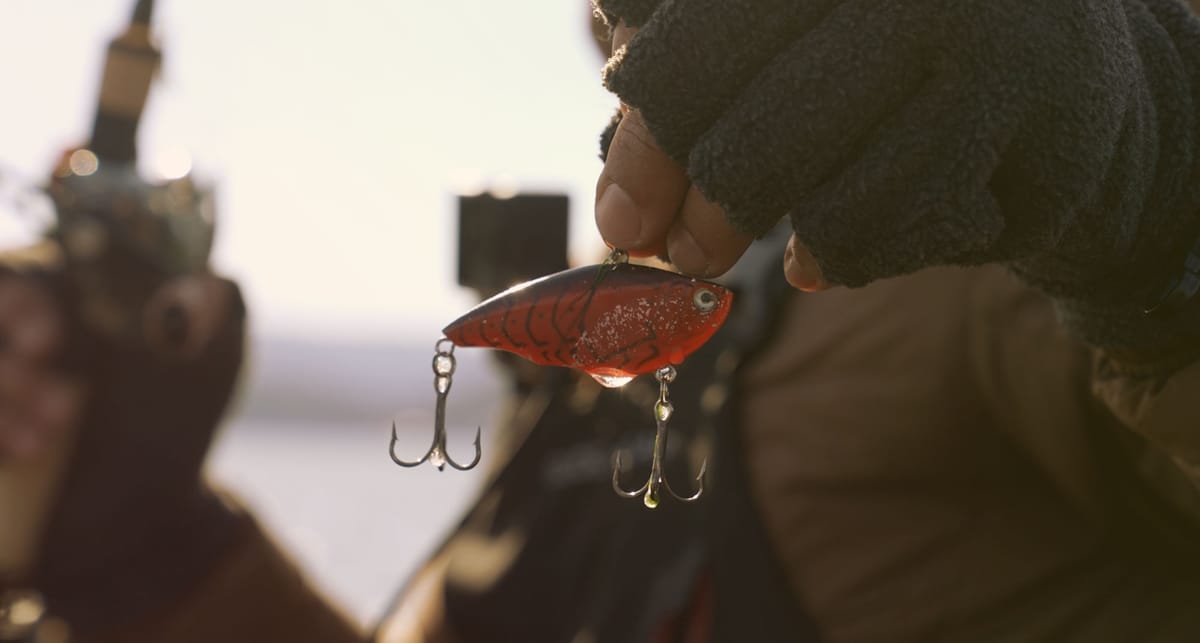
February is here, which means it’s officially trap time. Call it a rattle trap, a Rat-L-Trap, a lipless crankbait, a lipless rattler, or simply a trap – these noisemakers are proven fish catchers from the early pre-spawn through the spawn, across a variety of fisheries.
March used to be considered the time to roll out traps, but over the years, tournament anglers have proven that the trap window starts well before March when water temperatures first rise to the 50-degree mark. Call it late winter, when bass are making the initial move from that slumberous, suspended state to more of a bank-related pre-spawn state. Some anglers even consider lipless crankbaits to essentially be blade baits with rattles. The tight vibration, with added audible resonance, triggers something in bass that makes them crush traps with reckless abandon.
Beating Bass Conditioning and Fishing Pressure
If you are lucky enough to be the first to sling a standard ½-ounce trap on a vegetative lake in the early spring, you will think you’ve discovered a lure no one else has ever thrown. However, once the word gets out, and a rash of rattlers hits the same zones for a few weeks, the trap bite can come to a screeching halt. Unfortunately, when the same noise that makes a trap so potent is repeated thousands of times per day, bass can become rattle-resistant and clam up.
Over the years, I have covered many tournaments that became rattle battles with multiple anglers trapping the same areas, day after day. Once anglers noticed which trap was working best in the crowd, they all started slinging the same trap in the same color. After a couple of days, fishing pressure took its toll, and the bite in the area cratered. One thing became apparent in these situations: anglers who were savvy at the trap game fished circles around those who were not. Those who survived to make the final day employed what they called “tricky traps” to keep earning bites amidst the high-pressure zones.
Tactical Adjustments: Size, Weight, and Color
In simple terms, bass get conditioned to the buzz of traditional traps. But the tricky traps have a unique twist that separates them from the collective drone. That’s why lure companies make so many different versions of a rattle trap: they are trying to tap into a bass’s inherent ability to single out an irregularity in a sea of sameness. They want to build a better mousetrap out of a rattle trap, so to speak. The concept is to take the basic lipless design and tweak some aspect of the lure to make it different from the standard trap. “Showing them something different” is a principle that certainly makes a difference in trap strategy.
The standard rattle trap is a lipless crankbait about 3 inches in size that emits a “swishy” sound from a BB-filled chamber. Some of the proven classics include:
- Bill Lewis Original Rat-L-Trap
- Strike King Red-Eyed Shad
- Lucky Craft LV 500
- Yo-Zuri Rattl’n Vibe
- Spro Aruku Shad 75
These comprise a trusted lineup of tried-and-true traps that are rattling the water column in the spring.
Trap trickery starts with having at least two or more different brands of traps on the deck. Even though traps may be the same size, they differ in vibration, how they “hover” on a pause, and how they fall on slack line. Lipless experts know that experimenting with these different nuances across separate brands can make a big difference. For instance, some 3-inch traps are on the lighter side, while other 3-inch traps are on the heavier side. The Original Bill Lewis Rat-L-Trap measures 3 inches and weighs in at ½-ounce. The Aruku Shad 75 is 3 inches and scales at 5/8-ounce. The Lucky Craft LV 500 and Rattl’n Vibe (75) are both 3-inch baits as well, but pack on ¾-ounce. These different size-to-weight ratios all create different actions and vibrations.
As fishing pressure increases, the next trap twist is to go with a size change, usually to a smaller 2-1/2-inch size. I learned this by covering numerous co-anglers through the years. One of their back-deck secrets was to use the smaller 2-1/2-inch traps in a rattle battle. By the last day of the event, I was surprised by how co-anglers’ catches tended to get better in the most trafficked areas. The Aruku Shad Jr. 65, the ½-ounce Red Eyed Shad, and the ¼-ounce Rat-L-Trap are all sneaky 2-1/2-inch traps.
Another sharp diversion to make in the trap game is through color. Lipless crankbaits come in some of the craziest colors known in bass fishing. From realistic shad schemes to colors that look like an elementary school art project gone horribly wrong – every color imaginable is available in rattle traps. Bill Lewis Original Rat-L-Traps, Lucky Craft’s LV 500s, and Strike King’s Red-Eyed Shad come in massive arrays of color choices, offering more than 60 options per brand.
While the topic of color is a constant source of debate in bass fishing, it does seem color plays more of a role with lipless rattlers. In general, the natural shad patterns tend to work better in the fall, and the loud reds and oranges produce better in the early spring. True trap freaks like to keep a couple of shock colors handy to buck the system when needed. After everyone settles into winding with their usual Rayburn reds and fire craws, they send out a palette swirled in purple and chartreuse with gold polka dots to get some attention. I’ve seen the wild color-change-up trick work too many times to ignore it.
Color switching really comes down to noticing what everyone else is throwing and then digging in the box for something different. Sometimes it’s as easy as going more reflective if everyone around is throwing flat matte colors. As an example, Yo-Zuri’s Rattl’n Vibe has a 3D prism insert that throws off a subdued flash to offset traditional matte finishes.
One-Knockers and Silent Lipless Crankbaits
Finally, when the waters have been shelled to oblivion with rattlers, changing the sound of a lipless crankbait can be the trick play that saves the day. This is where a duller-toned “knocker,” or “one-knock” bait comes in handy to change up from the higher “swishy” pitch.
Bill Lewis Lures recently introduced the Knockin’ Hammer trap, a one-knocker built on a different frame that produces a more aggressive action with a deeper one-knocker sound. Other proven performers in achieving that different low-pitched thump include the 6th Sense Quake Thud, Lucky Craft’s LV 500 DRS, Booyah’s famous One Knocker, Red-Eyed Shad Tungsten 2 Tap, and the Yo-Zuri Rattl’n Vibe One Knock Lipless.
If you really want an alternative sound in a heavily pressured trapfest, then just go silent. Yes, that’s right, a silent rattle trap – the ultimate oxymoron. Compared to standard traps and one-knockers, the availability of silent traps is somewhat limited. The Damiki Tremor 65 Silent and the Spro Aruku Shad Silent 75 are two proven silent traps. In addition, two newer lure companies making sneaky silent models include Thunderhawk’s Sergeant Silent and Copper Red Baits’ Snatchin’ Shad Silent.
This season, don’t let the standard hum of the rattle battle put a lull in your trap game – rotate in some tricky traps to keep the bite alive.