How to Catch Big Bass in Late Winter & Early Spring

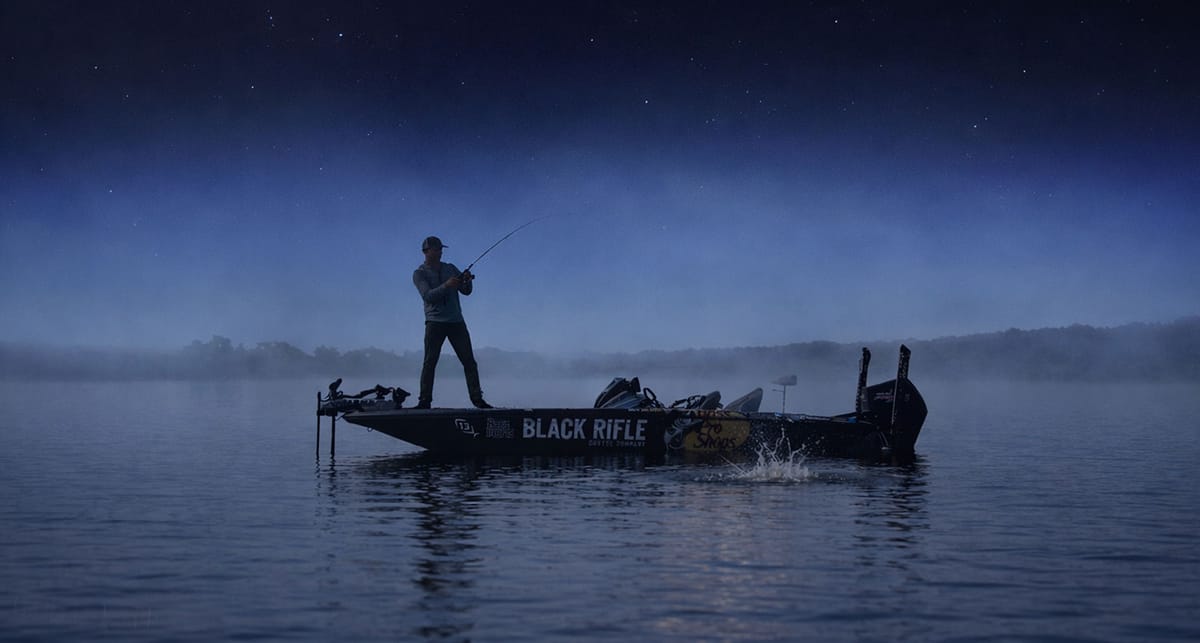
There is a traditional bass fishing theorem that asserts the biggest bass are caught in the spring of the year. As the old timers used to say, springtime is when the big sows come up shallow to spawn. Indeed, the bedding season has produced many record-breaking catches in tournaments through the years. However, in the modern era of tournament bass fishing, Old Man Winter has proven that many giant bass are also caught well before the spawn, during the transition from winter to early spring.
The cold waters of winter seem to be a memory eraser for big bass. Whether it’s the frigid water numbing their brain or a drop in fishing pressure during the winter months, big bass seem to lose IQ points this time of year. Anglers who are also avid hunters liken this stage to when big bucks are “up on their feet,” in the coldest of weather, just before the rut. I have even heard anglers refer to this time in bass fishing as the pre-pre-spawn.
Whatever it’s called, there is a consensus among top tournament anglers about a special time period between the dead of winter and when Jack Frost begins to loosen his grip on the weather map. They contend that during this time, the biggest bass are the most vulnerable to being fooled, making it the premium window to hunt a personal best bass.
How Pros Target Giant Bass Before the Spawn
One professional angler who subscribes to this theory is Bassmaster Elite Series pro Chris Zaldain. Having grown up in California and now residing in Texas, Zaldain’s signature fishing style is heaving big swimbaits for the biggest bass in a lake. He has spent hundreds of hours hunting huge, solitary bass in lakes all across the country.
“January to March is prime time for fooling big bass with big fake rubber fish,” Zaldain says. “By late winter, most bass have reached their peak weight for the year. Their metabolism is slow; they don’t want to expend a lot of energy chasing a bunch of small bait around. They would rather track down a big gizzard shad to fill them up with less effort. If they look up and see a big swimbait waggling along, it’s going to pull them up for a better look.”
Zaldain usually begins his big bass search on the lower third of a lake where he is apt to find the clearest water. He prefers clear water for big baits because it amplifies the drawing power of the 7- to 8-inch swimmers in his arsenal.
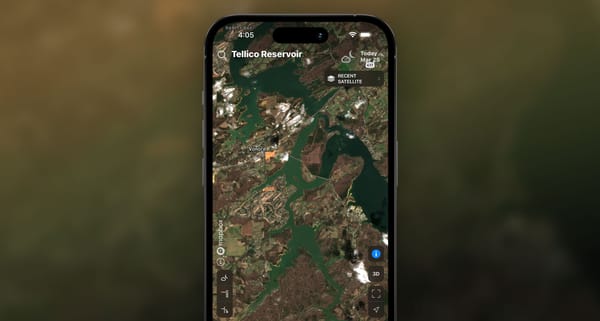
“More times than not, the biggest fish live on the lower end of a lake where the clearest and the most stable water exists,” Zaldain says. “Before I launch my boat, I pull up the Deep Dive app and check the Water Clarity Map to make sure I’m launching closest to the clearest water available.”
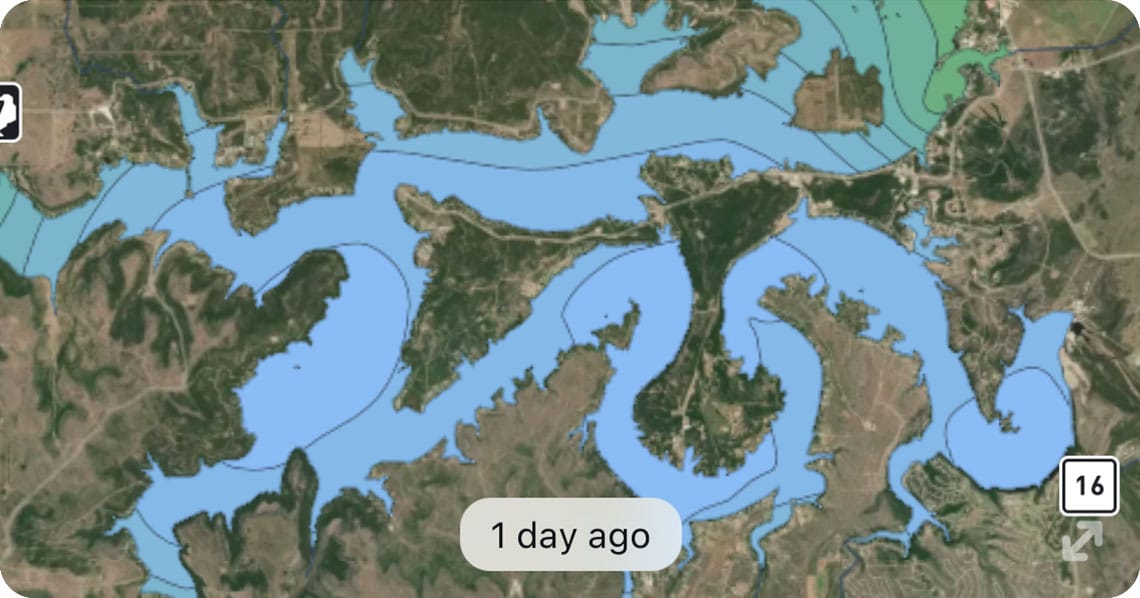
“Clear water is the mainstay of this big fish technique,” he adds. “You need visibility of at least 2 to 3 feet. Having visibility in the 5 to 10 feet range, or more, is a bonus.
How Water Temperature Influences Bass Behavior
Once he is on the water, Zaldain checks the water temperature. Ideally, he is looking for water that’s 55 to 62 degrees. If the water temperature is just reaching the 55-degree mark and making its first push of the year towards 60, all the better. If the water is at the 62-degree mark, he prefers to fish in cold-front conditions, hoping that the water temperatures will drop back down to delay bass from going into an all-out spawn phase.
As for the right structure and cover to target with his fake rubber fish, Zaldain holds no secrets.
“Anything that has the perfect wind on it,” he says candidly. “Clear water and wind are the principal players in throwing big baits; they are the components that combine to create a perfect swimbait window. Clear water draws them up, but the wind ripple on the surface closes the deal in creating that moment of weakness.”
Using Wind and Waves to Find the Perfect Bite
Zaldain relies heavily on his Deep Dive Wave Impacts Map to find that “perfect wind.” When the Waves and Banks tool is turned on and illuminating the banks in red, there is too much wind. However, the orange indicators approaching the banks at an angle, or blowing across points, tend to be the sweet spot.
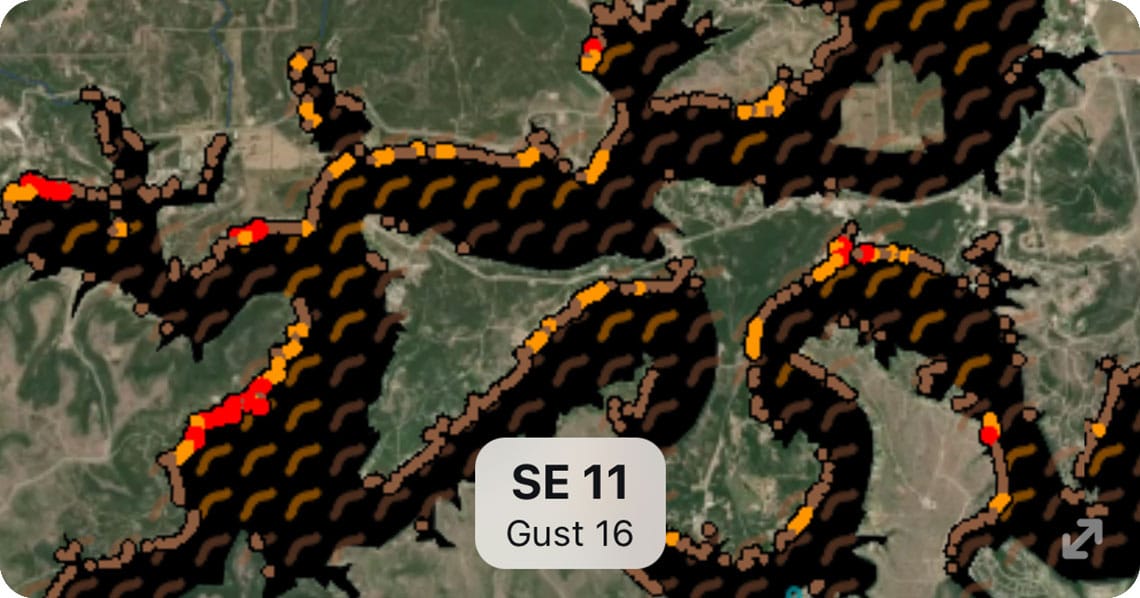
“I’m not looking for three- or four-footers crashing up onto the bank,” he details. “I’m looking for a consistent, robust ripple that breaks up the light penetration to do the trick. Deep Dive’s Wind Effects makes it easy to run the highest percentage breeze-brushed areas based on the best speed, direction, and angle of the wind.
Once Zaldain IDs perfect wind-ripple banks, he will fish any kind of hardcover that tends to reflect and reverberate the ripple.
“To begin with, I look for obvious structure and cover,” he reveals. “A lot of times, I’ll start my search right on a dam – the most obvious structure in the lake. I’ve caught a lot of big bass right off the dam riprap.”
“Since the lower ends of lakes are steeper, I like those 45-degree banks and channel-swing banks,” he continues. “There is usually a lot more exposed natural rock and riprap bank on the lower end, too. I’ll also run main lake points, big laydowns, boat docks, and even marina areas.”
Big Swimbait Gear and Setup
As for the swimbaits, Zaldain has designed his own Daingerous Swimbait made by Bass Mafia. His two preferred models for fishing isolated cover in open water are his Daingerous LD 7 and LD 8.5, both in the shallow version. He fishes the swimbaits on an 8-foot flipping stick that features a longer butt section for more leverage to make long casts. The swimbaits are powered by a Bates G.O.A.T. SWM 200 reel spooled with 25-pound test Seaguar Tatsu fluorocarbon line.
As for technique, Zaldain starts with a long cast, lets the swimbait sink to the bottom, and then engages a very deliberate retrieve.
“The trick to swimbait fishing this time of year is a slow, steady retrieve,” Zaldain explains. “No twitches, no pauses, no erratic motion, just kept the bait on a constant track, and let the tail of the swimbait do the work. There is something about that straight trajectory and rhythmic thumping tail that mesmerizes big bass; they are just drawn to it.”
The final key to connecting with a big bass on a big swimbait is commitment to the process. Big swimbaits need a lot of water time to work their magic. Hunting a big bass with a swimbait requires locking it in and staying with it. And when you least expect it, something beast-like will thump your tight line into pure slack, stopping your heart. When you come tight on the reel and feel the power of the initial head shake, the adrenaline blast will kickstart your heart back into existence. Enjoy the moment!