Largemouth Bass Fishing Guide: Pro Tips & Strategies

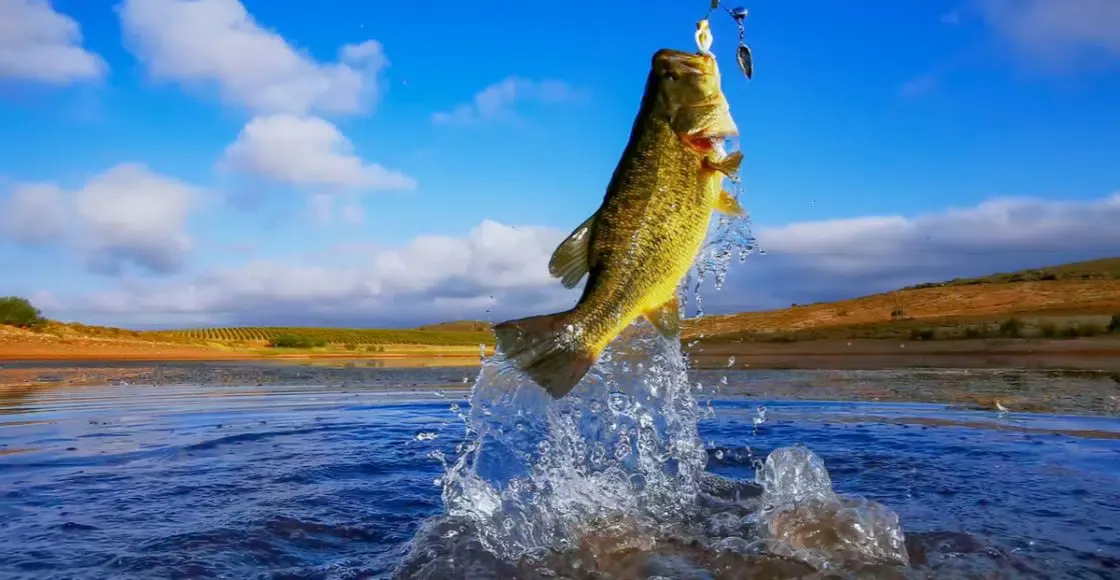
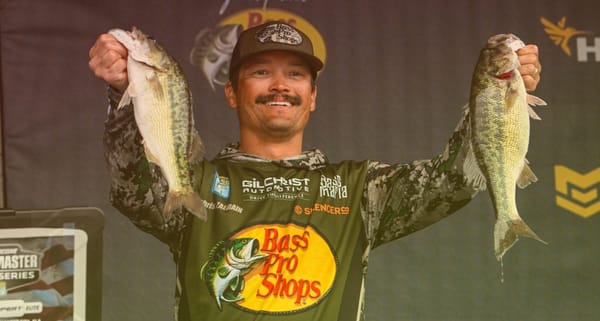
The Largemouth Bass (Micropterus salmoides) is the king of freshwater game fish. Known as Largies, Bucketmouths, Green Bass, or Hogs, they’re the most sought-after species in North America because of their aggressive behavior, adrenaline-inducing fights, and accessibility for anglers.
Catching largemouth consistently takes more than luck. You need to understand why they choose certain spots, how their behavior shifts with changing conditions, and which tactics work best throughout the seasons.
This guide will help you learn more about largemouth bass and the data driven strategies that will help you get more bites.
Understanding Largemouth Bass Behavior
Largemouth bass are apex ambush predators. They don’t roam aimlessly—they set up where conditions allow them to feed efficiently while conserving energy. Their feeding aggression, positioning, and strike zone expand or contract based on a few key environmental factors.
The Water Clarity Factor
Water clarity is the single biggest behavioral trigger for largemouth bass. It dictates how they hunt, how far they’ll move to strike, and what presentations will trigger bites.
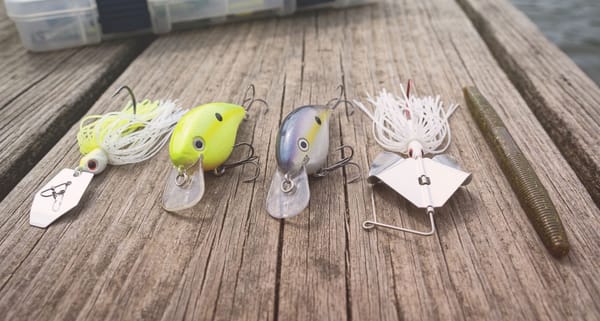
- Stained Water: Largemouth rely on their lateral lines to "feel" vibrations. In these conditions, they hold tighter to objects (stumps or docks) and require high-thump lures like Chatterbaits and Colorado-blade spinnerbaits to trigger bites when visibility is low.
- Clear Water: Bass become visual hunters. Their "strike zone" expands, meaning they will travel further to hit a bait, but they are much more suspicious. This requires "match the hatch" realism, natural colors, and thin fluorocarbon lines to avoid spooking them.
Oxygen Levels & Positioning
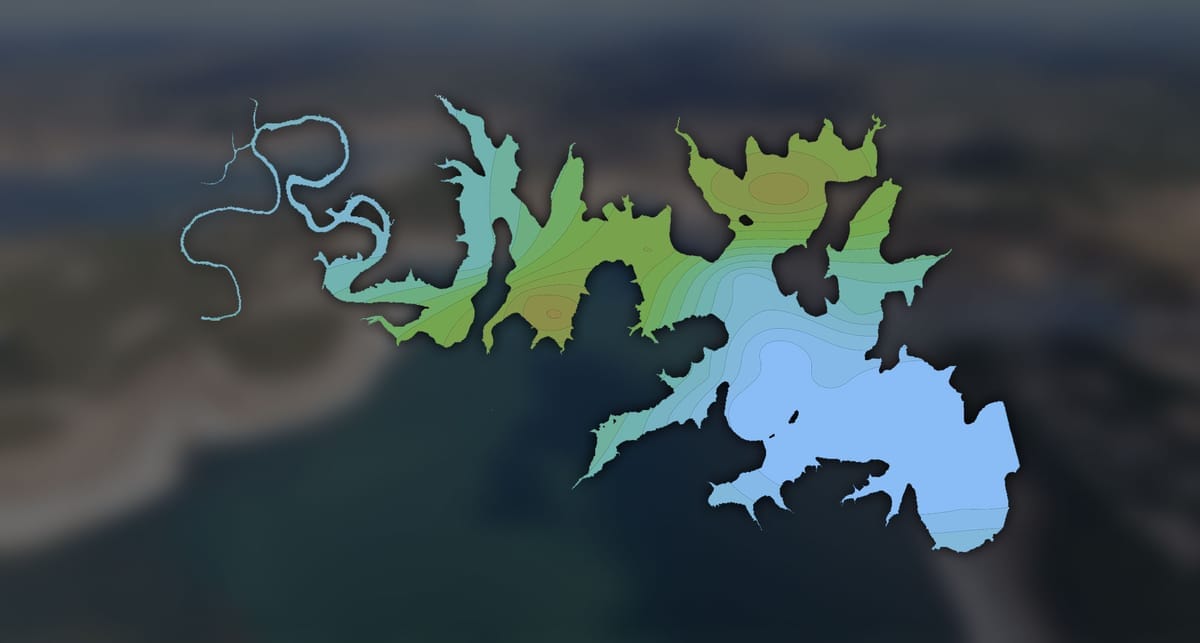
Bass are driven by comfort and survival. During the heat of summer or late-winter stagnation, bass don't just go deep; they go where the oxygen is highest. They seek out moving water, wind-swept points, or thick vegetation that "exhales" oxygen during the day. If the water is stagnant and hot, the fish will be lethargic and nearly impossible to catch.
The Wind-Driven Feeding Window
Wind is a dinner bell. When wind beats against a bank, it pushes plankton toward the shore, which attracts baitfish, which in turn brings in the predators. Wind also breaks up the surface of the water, making it harder for the fish to see you and making them much more likely to commit to a moving bait.
Largemouth Bass Habitat
Bass are found in almost every body of water, from sprawling reservoirs to small farm ponds. They thrive in warmer, shallower environments where they can utilize both natural and manmade features to hunt.
To find the most productive water, look for these key elements:
- Living Vegetation: Bass gravitate toward weed lines, lily pads, and hydrilla mats. These areas provide oxygen, shade, and an endless supply of prey.
- Submerged Wood: This includes natural features like downed trees and brush piles, as well as manmade structures like fish cribs and dock pilings. Wood provides a solid "hard" surface for bass to pin prey against.
- Hard Bottoms & Rock: Rock bars, points, and rip-rap are essential transition zones. Rocks hold heat in the spring and provide a home for crawfish, a primary protein source.
Pro Tip: The best spots are "Complexes"—areas where multiple features overlap. A dock sitting over a weed line next to a rocky point will almost always hold more fish than a dock sitting over a bare mud bottom.
Largemouth Bass Food Sources
Largemouth bass are opportunistic eaters; if it fits in their mouth, it is a target.
- Baitfish: Shad, Bluegill, and Minnows make up the bulk of their diet.
- Crustaceans: Crawfish are vital, especially during the pre-spawn when bass need high-protein meals.
- Surface Prey: Frogs, lizards, and even small rodents are frequent targets when bass are shallow.
Matching local forage is one of the fastest ways to increase bite quality.
Seasonal Strategies
- Spring (The Spawn): Bass move from deep winter haunts to shallow flats. Focus on protected pockets and northern banks that receive the most sunlight and warm up first.
- Summer (Comfort): Bass seek shade or deep, moving water. The best fishing occurs during "low light" windows—dawn, dusk, or under heavy cloud cover.
- Fall (The Feed): As water temps drop, bass follow shad into the backs of creeks. This is the time for aggressive "search" baits like crankbaits and topwater.
- Winter (Conservation): Metabolism crashes. Bass group up in deep, stable water near vertical structure like bluffs or bridge pilings.
Weather & Best Times to Catch Bass
Largemouth bass pay attention to more than just structure—they react to sunlight, clouds, and pressure changes. They feed most actively at dawn and dusk, but cloudy skies can make them move more freely, while bright sun keeps them near shade or cover. Wind, temperature, and pressure shifts affect activity, and sudden cold fronts can slow feeding while falling pressure may trigger short bursts.
Understanding these weather conditions is key for planning effective trips:
- Temperature: Track both water and air temperatures throughout the day. Bass are often more active during stable periods or when warming/cooling triggers feeding.
- Feeding Windows: Moon phase, sunrise/sunset, and daylight patterns help identify major and minor bite times so you can plan your trip around when fish are most likely to feed.
- Wind: Direction, speed, and gusts can push baitfish into strike zones, creating hotspots for predators.
- Pressure: Rising or falling barometric pressure often signals feeding activity, giving a heads-up on when bass will bite.
- Chance of Rain: Precipitation can affect activity—fish often feed more just before or after rain. Knowing this helps you target peak bite windows.
How to Use Deep Dive to Catch More Bass
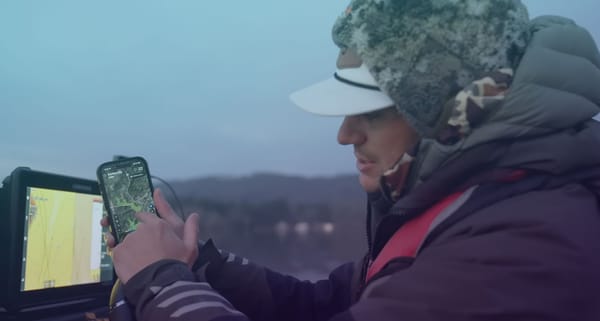
Once you understand the "Why" behind bass behavior, you need the "Where" and "How." This is where the Deep Dive app gives you data driven insights to find the best spots and optimize your strategy.
Instead of guessing where to fish, Deep Dive uses environmental conditions to show you the highest percentage spots.
Water Clarity Map
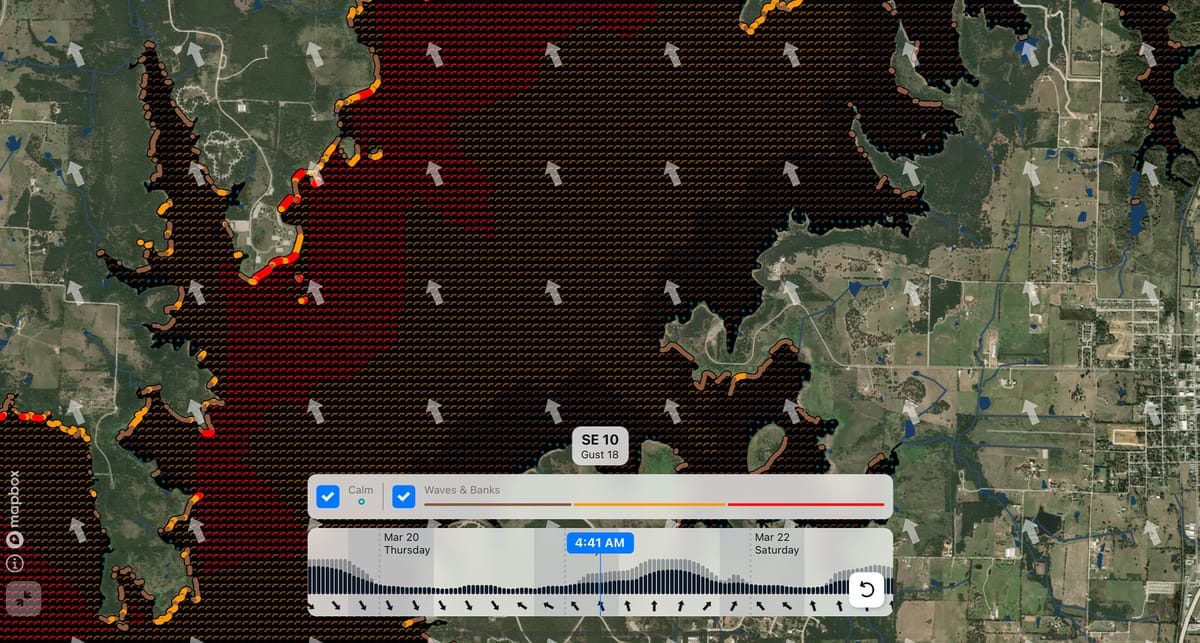
Water clarity is the primary factor that determines a bass's "strike zone"—the distance they are willing to travel to hit a bait. Deep Dive uses near-daily satellite imagery to process high-resolution data, color-coding the lake into Clear, Stained, and Dirty zones so you aren't guessing what the water looks like before you launch.
Wave Impacts Map
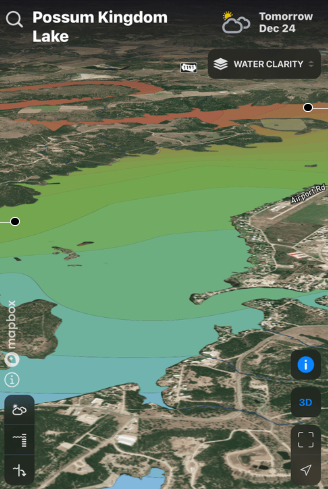
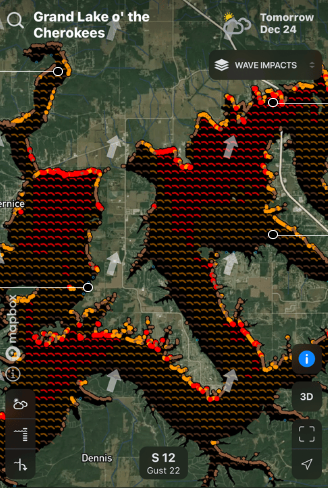
Wind acts as a dinner bell for bass, but only if you know which bank is catching the right amount of energy. Our exclusive map highlights wind-blown banks in Red to show you exactly where waves are creating active feeding zones. These areas stir up microorganisms that attract baitfish, concentrating prey for predators in a localized area.
Water Inflows
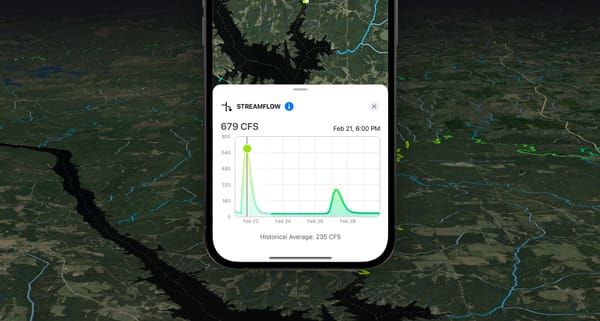
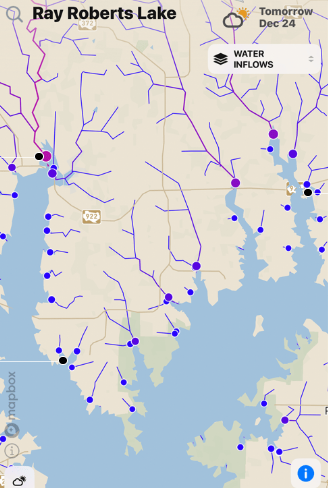
Hidden creeks, rivers, and drains bring fresh, oxygen rich water and nutrients into the lake, creating hotspots for baitfish and the predators chasing them. These inflows can funnel prey, create cover, and concentrate fish in one spot. By identifying these entry points, you can find active fish that are often more concentrated than those in the open lake.
Bait Tool
Find the best bait for your lake every time, using real data and live conditions. You control the key inputs that matter most:
- Water Clarity: Select clear, stained, or dirty water to match current conditions.
- Season & Lake Level: Adjust for pre-spawn, summer, fall, winter, and current water level.
- Aquatic Vegetation & Cover: Input weed density or other structures that influence fish behavior.
- Time of Day: Choose the period you plan to fish for the most relevant bait recommendations.
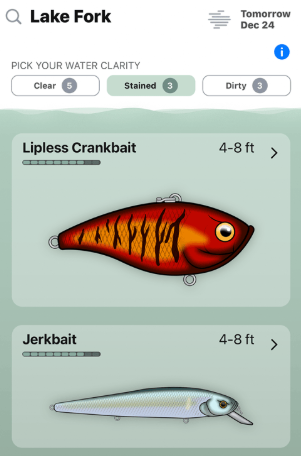
Your inputs are combined with weather and historical lake patterns to give bait recommendations by water clarity, with the top choice listed first. You can adjust for any day or time up to 7 days ahead to see what fish are likely feeding on before you cast.