Jordan Lee: The Critical Role of Current Conditions

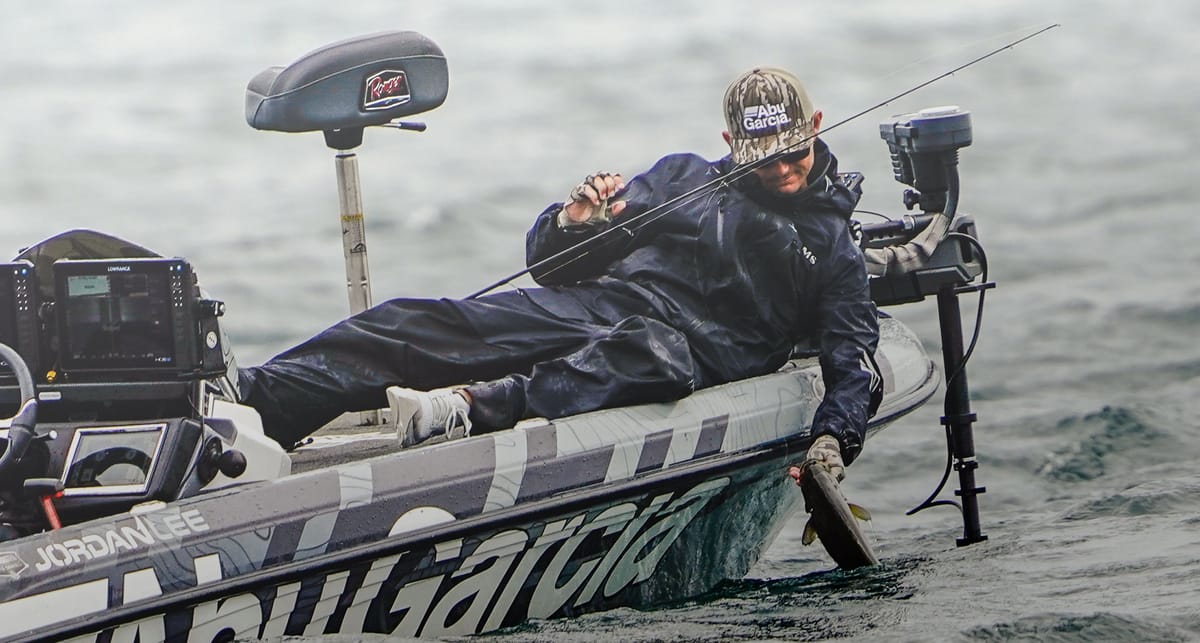
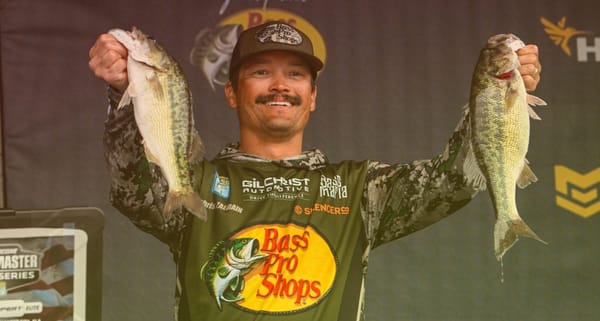
After Jordan Lee won his second Bassmaster Classic in 2018 at the age of 26, I asked him a question that had perplexed me about his back-to-back world titles.
“How does a guy your age go to Conroe and Hartwell, (the sites of his two Classic wins) and beat a field of veterans that have more previous experience on those lakes?” I asked.
Lee offered an answer that seemed counterintuitive to an old outdoor writer.
“In my opinion, extensive history on a lake is overrated,” he said. “The most potent information is usually the most current conditions for that lake.”
To me, his reasoning didn’t make sense. If one angler has 20 years of collective fishing experience on a lake, he must have far more knowledge of that lake than a guy who has fished it just a couple of times.
Lee then took a few minutes to break this notion further, providing my first insight into the young fishing phenom’s mindset.
Why Lake History Isn’t Always the Key to Bass Fishing Success
His premise was that lakes change constantly – much faster than we might think. Lakes may look the same on the surface, year after year, but under the water, there is a dynamic ecosystem that is in constant flux.
Obvious forces like floods, droughts, or hurricanes cause noticeable and striking changes. But it’s the subtle transformations that change bass behavior more than we know. Maybe it’s more shoreline development, a new form of vegetation, or even a new forage that’s creeping into a lake. Some years, there might be prolific bream spawns that change the primary forage of bass for a season or two. Maybe a cooler-than-normal summer means less electricity demand for air conditioners; therefore, dam generation at particular lakes is not as intensive. No matter what it is, there is a constant evolution going on with lakes at all times. And bass are constantly adapting to it.
These days, Lee still sticks to his theory that how fish were caught on lakes 10 or 15 years ago pales in comparison to a reliable set of prevailing conditions. And it continues to serve him well. During his five-year campaign on the Bass Pro Tour from 2019 to 2023, he won four Bass Pro Tour events.
How Subtle Changes Affect Bass Behavior
In fact, Lee has doubled down on his belief that even the smallest changes in the recent conditions shift bass moods, movements, and positions.
“There has been an undeniable impact of intensive fishing pressure on a lot of lakes over the last five years,” Lee explained. “Now we have a whole new realm of electronics pinging around out there constantly. Take it all into consideration, and the lake you are fishing today is not the same lake you were fishing 10 years ago – or even 10 days ago, for that matter. Current conditions are now more critical than ever before in bass fishing.”
Lee uses his own experience on Lake Guntersville, his home lake, to further illustrate his point.
“When I was younger, I used to fish Guntersville every chance I got,” he said. “I was on the pulse of the lake every week and knew how subtle changes in conditions had changed the bass. But once I started traveling all over the country fishing, I lost contact with the lake.”
“Now, when I come home to my ‘home lake,’ the one I’m supposed to know the most about, I’m lost,” he continued. “If I try to just ‘pick up where I left off,’ so to speak, it never works. So I treat Guntersville just like I would any lake on tour: I start from scratch.”
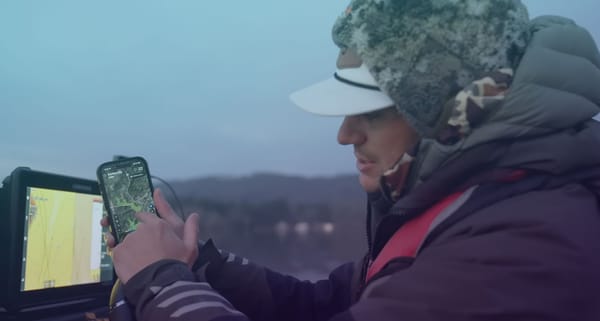
“From scratch,” for Lee used to mean checking a multitude of mobile apps and websites for various lakes across the country. Over the years, he collected dozens of weather, water level, wind, and power-generation apps in his phone. In addition, he had to visit several websites to check rainfall amounts and stream/river flow levels.
“By the time I sorted through all those apps and sites on my phone just to get current conditions, the conditions had already changed,” Lee laughed.
Current Conditions vs. Historical Knowledge: Lee’s Strategy
These days, Lee no longer deals with the frustration of shuffling around a multitude of apps to find current conditions for a specific lake. Thanks to the Deep Dive app, he has all the current conditions of any tournament lake in the country, all on one app. Like the Swiss Army Knife of current conditions, Deep Dive is now his one-stop app for all the real-time data he needs.
“There are fishing apps out there that are designed to suggest what lures to throw on a lake for a particular time of year and particular type of cover,” Lee said. “Deep Dive has that function, too. But Deep Dive also has a whole suite of real-time data for most of the tournament lakes in the country. It’s pretty incredible how much key information they have collected in one place.”
Real-Time Tools for Bass Fishing
A few of the real-time tools Lee is talking about, which are specific to Deep Dive, include a current weather tab, a Lake Level graph, a Water Flow graph (in cubic feet per second) for power generation lakes, Wind Effects Maps, Stream Flow Maps, Water Inflows Map, and the extremely potent Water Clarity Maps.
Now it’s all right there on my phone,” he added. “This app is truly a breakthrough in how we can assimilate all these conditions simultaneously. As more anglers find out about this app, and how effective it is, it’s going to be a force to be reckoned with.”
Next time, we will have Lee break down all of Deep Dive’s real-time data tools and ask him which ones are his favorites.