Five Lures for December

The month of December is the final transition from the last of the fall season into true winter. Up until this point, water temperatures have been steadily declining from the 70s into the 60s. Now, more intense fronts of winter will squash water temperatures into the low 50s and over the cliff into the 40s.
With this final push into winter, there are several key things to keep in mind. First, with colder water, underwater environments become slower and more sterile. Fish metabolism declines, and the overall biomass moves much more slowly. Additionally, cold water tends to clear up due to a lack of algae growth and helps in dropping suspended sediment and particles from the water. Primary bass forage, like shad, has migrated to the deeper basins, ditches, and drains. Sunfish species, like bream, become nearly dormant. Finally, bass simply don’t need to eat as much when their metabolism slows.
While these changes may not sound very encouraging for fishing, December often brings a decrease in overall fishing pressure. Community holes that have been throttled all summer are left to recuperate and reload. Some days you may have the lake to yourself without having to play take-a-number to fish certain hotspots.
In summer and fall, various patterns and techniques are plentiful, but by December, tactics boil down to about two or three options. One is to slow your presentation way down to match the lake’s energy, so to speak. With so many species of fish becoming sluggish or semi-dormant, a slow and natural approach to trick bass into biting can work. Another option is to provoke a reaction strike. Since Bass don’t have arms, they defend themselves with their mouth. If something “gets up in their face,” the only way they can fight back is to eat it. Baits that threaten a bass with an offensive move get crunched, making reaction baits a great pick. Finally, this time of year, bass start to roam out in open water, using schools of bait for cover and food. Much like pelagic predator fish in the ocean, they follow bait pods, feeding whenever the mood moves them.
Thanks to the advent of forward-facing sonar, finding this relationship between open-water shad schools and bass has become a much easier task. Brutal cold fronts will tend to push the bait deeper and tighter. Warming trends bring the bait back up higher in the column and spread it out a little more. No matter where the shad schools go, the bigger “blips” below will follow.
For that reason, the red-hot minnow-shaking technique is sure to warm up those cold December days. As for minnows, take your pick. Choices run the gamut from the Berkley’s Drip Minnow to Crush City’s Mooch Minnow to Yamamoto’s Hinge Minnow to the ever-popular Deps Sakamata Shad. Minnow options abound, as do the kinds and sizes of jig heads.
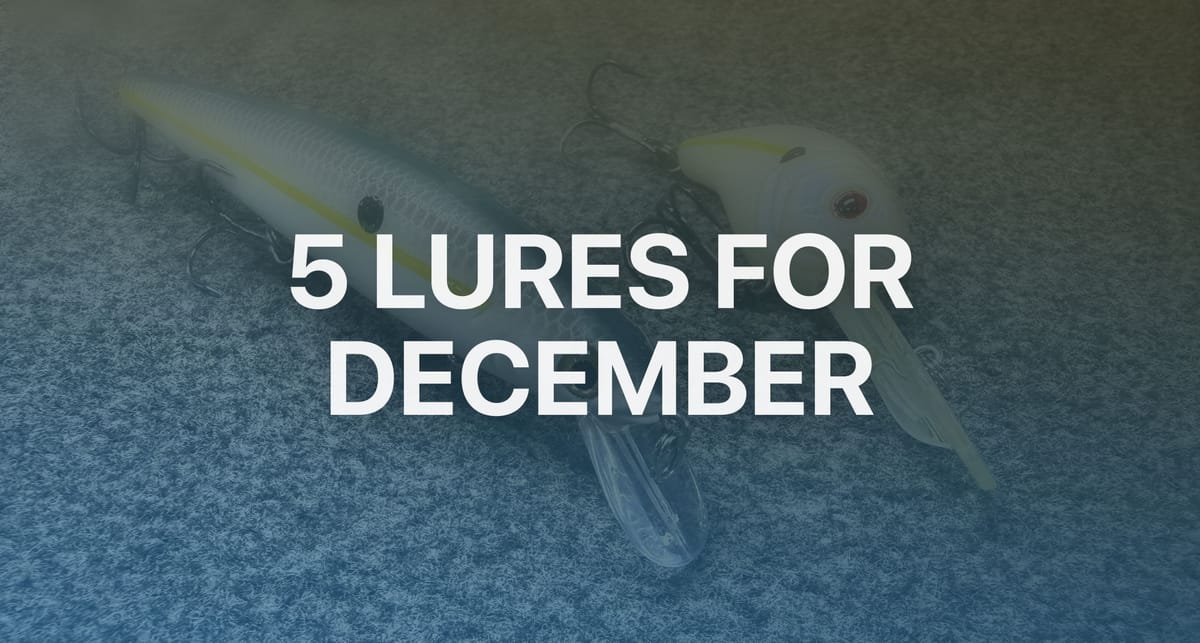
Suspending jerkbaits continue to be a hot item in December as well. However, consider using ones with a bigger lip that will dive deeper, faster. Whether you are targeting deeper cover or shad pods on scope, a larger bill drives a suspender down to 7 to 10 feet quickly with a shorter cast. Lucky Craft’s Deep Diving (DD) series, Megabass’110 +1 or +2 series, or Rapala’s PXR Deep Mavrik 110 Jerkbait are all up to the frigid task. The colder the water gets, the longer the pauses should be between twitches. This gives the bass a moment or two longer to approach the lure while in a sluggish mood.
December is also the time to break out the hard metal. Jigging spoons are deadly reaction baits when the wicked cold fronts really start shelling a lake. Prolonged cold fronts push shad deeper, causing them to congregate tightly in 30 to 60 feet of water. Bass lurk around those open-water shad balls waiting for an opportunity. Sending a ¾-ounce spoon straight down into the bait ball creates those opportunities. Disrupting the shad with aggressive jigging makes shad flee. This gets bass’ attention. The spoon then becomes a flailing or fleeing shad from the school, and bass swoop in and eat it.
The Hopkins name has been a benchmark in the jigging spoon business for decades. Their Shorty and NO EQL versions of metal spoons in 1/2- and 3/4-sizes have caught thousands of winter-time bass. Nichols is another well-known name in the spoon game. Their Duh spoon offers jigging spoons in a variety of sizes and colors. War Eagle also produces proven spoons in different colors.
If you prefer a more traditional approach or fish in shallower waters, then crankbaits and jigs are more appropriate. Each one covers an extreme end of the speed spectrum.
For crankbaits, go a little deeper than the squarebills from November. Crankbaits such as the Rapala DT-10, Shad Rap 9, Elite 55, SPRO RK Crawler 55, or a Berkley Frittside 9 are good choices. Go to a lighter line, like 10-pound test, and these baits will reach 8- to 12-foot depths much quicker. Speed is key with December crankbaits. Crank them fast and try to smash them into cover like pilings, standing timber, rock, or brush. Try to be rude with your lure. By intruding into a bass’ space, the fish is forced to defend its territory, which elicits that classic cold-water reaction bite. When fishing this way, always make repeated casts to the cover at different angles. This is a secret from the old schoolers who could score a big bite on the 12th cast in a row to the same piece of cover.
Despite the modern influx of up-tempo fishing styles, the old dead-sticking ways still work in super cold water. Having the patience to creep a jig or dead stick a drop shot in and around cover can be a huge advantage when it’s frigid. Retrieves for these lures may last several minutes. Back in the day, this technique was called “counting sticks,” or “counting stones,” since it required stitching a lure so slowly to feel each detail. Letting the lure soak with each contact point before pulling over it is critical. It’s similar to sight-fishing a bass on bed, where the longer the bait sits there, the more it aggravates the fish. Most standard ½-ounce Arkie-style jigs with a subdued-action trailer will work. Some may prefer a football jig for flatter, gravely bottoms. Just make sure it’s heavy enough to maintain contact with the bottom. For a drop-shot, rig the worm weedless and pitch it under docks, next to pilings, or into brush piles. Hold the line tight. If it’s freezing or below, shivering from the cold can add a perfect shimmy to the worm.