Cracking the Code of Classical Conditioning

Bass are conditioned creatures. Many times, their desire to feed is stimulated by some larger change in their environment. As an angler, if you can predict or detect that change ahead of time, you can be at the right place at the right time to take advantage of that stimulus.
Over the years, I’ve observed some peculiar classical conditioning stimuli that directly caused feeding frenzies from bass. Much like Pavlov’s dog, when the dinner bell rings, bass salivate.
Examples of Conditioned Bass Feeding
I have seen that dinner bell be a rickety railroad trestle across a creek. When the train comes roaring down the tracks every day, it vibrates the pilings in the creek bed. When the shad start fleeing from the ruckus, bass start schooling.
I have seen that dinner bell be striper guides dumping their unused live shad in marina stalls. In fact, former Bassmaster Classic Champion Jay Yelas nearly won a BASS event on Lake Texoma many years ago on this “striper-guide pattern.” Each day, he would fish around a small floating marina that housed a fleet of striper boats. The striper boats would return at around noon each day, clean up their boats, and dump unused shad into the water. Suddenly, the marina would come alive with schooling bass for about 30 minutes. Over three days, Yelas scored most of his limits during that 30-minute window and finished third in the event.
To see the profound effect of classical conditioning up close, visit the tailrace of a dam when generator releases begin. This is where a multitude of birds sit around the dam all day doing nothing. Suddenly, a squelching horn cracks the air. All the birds take flight and begin whirling around overhead. The dam begins to creak and moan as gates open to propel the turbines, filling the riverbed below. The gulls begin dipping and diving in the roaring currents. Herons and egrets perch on points positioned perfectly into the current, allowing them to nab shad at will.
At first, it might look like the horn frightened all the birds, causing them to take flight. However, after watching this process unfold several times, it becomes apparent that the horn signals that the all-you-can-eat buffet is being served.
This very same thing is going on under the water with fish, especially bass. They float around in slack water, seemingly uninterested in anything. When the generator gates open, bass snap out of their slumber and set up on ambush points to take advantage of baitfish being forced into current breaks and eddies. Current – the velocity of water – is the dinner bell for bass.
Using Deep Dive to Predict Feeding Stimuli
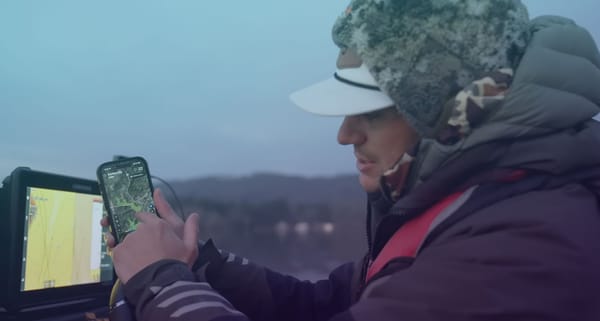
Anglers use this man-made conditioning to their advantage by being in the right place at the right time when the generators kick on. To some degree, “pattern fishing” boils down to patterning the stimuli that cause bass to feed, including wind, current, water clarity, and even tides. Keeping up with so many possible stimuli across a 70,000-acre fishery can be a monumental task. And that’s where the Deep Dive app can be a huge help. Deep Dive is a one-stop app that consolidates all these moving parts into one place, allowing an angler to best predict where the next conditional stimulus might occur.
Predicting Current and Water Inflows
Starting with current, Deep Dive has you covered with three ways to find where current is going to happen, before it even begins, especially in power-production reservoirs. In the example above of the tailrace coming to life with fresh current, the Generation Releases feature lets you know which generators are scheduled to run a day in advance. Now you can be in a position to take advantage of current when it happens. These Generation Releases are available for 47 Southeastern lakes controlled by the TVA and Alabama Power.
Another way Deep Dive helps you find current before it happens is with the Water Inflows map. This exclusive tool reveals every nook and cranny that contributes to runoff entering a lake through rainfall. This is a super sneaky weapon for highland impoundments with numerous creek beds and rivulets. When rainfall begins, bass are conditioned to move towards these mini waterfalls. Some of these seeps are not even visible unless you know exactly where they are located.
Deep Dive’s Streamflow maps can also help with finding conditional current. While the Generation Releases shows flow from dams, and the Water Inflows map will reveal tiny inflows from intermittent rainfall, the Streamflow map will provide the current flow levels of major tributaries with constant flow. This function is predictive and shows a stream flow forecast for the main creeks in a lake. This allows an angler to anticipate when the stream flow will pick up in a particular creek, thereby creating more bait and fish activity.
Monitoring Wind and Water Clarity
Wind is another stimulus that can initiate a conditioned feeding response. The first push of breeze after several days of calm can strike up the bite. To find the stretches of lake about to receive “new wind,” use the Wind Effects map to see when the wind will pick up or switch directions to create a new opportunity.
Certain water clarities infiltrating a lake can provoke feeding responses, too. Sometimes, all it takes is just a bit of stain in a clear-water lake to make fish lose their minds. The Water Clarity maps track influxes of colored water moving down a reservoir so you can see when the leading edge of stain moves down a particular arm of the lake. Getting just in front of this stain is another way of being at the right place at the right time.
Mastering Tidal Swings
Finally, tides are also an influential feeding stimulus for bass. When tides make swings, like from low to incoming or high to outgoing, this creates a conditioned feeding response as well. When it comes to keeping up with tides, there is no better tide tool than Deep Dive’s Tides function. It’s more than just a graph that shows high and low tides. The Tides tool interpolates the tides between stations, factors in the wind, and produces a water depiction model on a map showing how the tide will move in and out of an entire bay system. Currently, the Tides feature covers the entire Chesapeake Bay basin, including the James and Potomac Rivers; the St. Johns River in Florida; the Sabine and Neches Rivers in Texas and Louisiana.
Conditional dinner bells are ringing in fisheries across the country, so let Deep Dive help you set the table before the guests arrive.