Best Fishing Lakes in Alabama

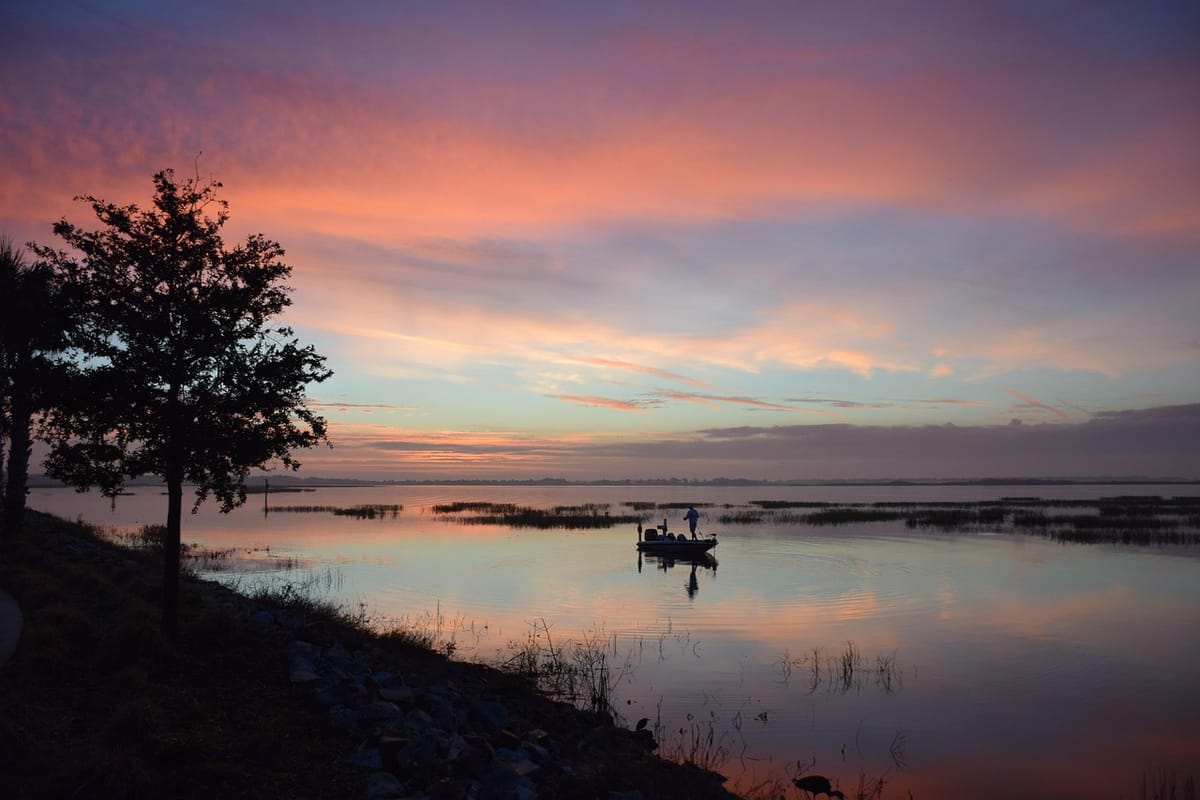
Alabama is one of the Southeast’s premier freshwater fishing destinations. Its lakes and reservoirs are full of largemouth bass, spotted bass, crappie, catfish, and bluegill. These waters provide anglers with productive fishing opportunities throughout the year. The state’s lakes offer diverse habitats, from shallow flats and creek channels to timbered areas and deep pockets. This variety gives fish plenty of hiding spots and provides anglers with multiple ways to catch them depending on the season. Whether you enjoy trophy hunting, casual weekend fishing, or competitive tournaments, Alabama has waters that fit every style and skill level.
In this guide, we highlight five of Alabama’s best fishing lakes and how you can use Deep Dive tools to fish smarter and get on the fish faster.
Top 5 lakes to fish in Alabama
Lake Guntersville
Why It’s Popular: Lake Guntersville is Alabama’s most famous bass lake, producing both high numbers and trophy largemouth bass over 10 pounds. The 69,000-acre lake has winding creek arms, shallow flats, timber, and deep channels that hold fish year-round. Crappie, bluegill, and catfish are also abundant, making it a multi-species destination. Its combination of shallow spawning flats, deep humps, and wind-driven points allows anglers to pursue multiple patterns in a single trip, keeping Guntersville a top choice for tournament anglers and weekend warriors.
Fish Species: Largemouth Bass, Spotted Bass, Crappie, Bluegill, Catfish
Seasonal Conditions: In spring, bass stage along creek points and shallow flats, often near timber edges, as they prepare to spawn. During summer, fish move to deeper humps and creek channels where the water is cooler and shaded. In the fall, bass follow baitfish along wind-driven points and flats, feeding actively before winter. Winter drives fish into main-lake channels and deep pockets where water temperatures remain stable.
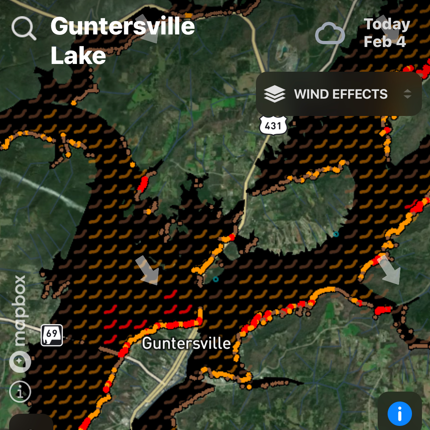
Deep Dive Pro Tip: Guntersville responds strongly to wind-driven baitfish movement. Use the Wind Effects map layer to locate flats and points where wind pushes prey toward shorelines, then target these areas at the right times for the most productive shallow or mid-depth presentations.
Pickwick Lake
Why It’s Popular: Pickwick Lake, a TVA reservoir on the Tennessee River, spans over 40,000 acres and is known for producing trophy largemouth, and spotted bass. Its generation releases create currents that stimulate feeding activity, giving anglers a clear advantage when the turbines are running. Crappie, bluegill, and catfish are abundant, and the lake’s deep channels and river bends provide consistent holding areas. Pickwick’s combination of moving water and protected flats makes it highly productive for tournament and recreational anglers.
Fish Species: Largemouth Bass, Spotted Bass, Crappie, Bluegill, Catfish
Seasonal Conditions: In spring, bass stage near creek mouths and shallow points, adjusting to rising flows from dam releases. Summer sees fish holding along deep channels and river bends where current concentrates baitfish, with shaded timber and deep flats providing relief from the heat. Fall drives bass along points influenced by dam outflows as they follow prey. Winter finds bass suspending in deep holes or main-lake channels where flow is steady and temperatures remain stable.
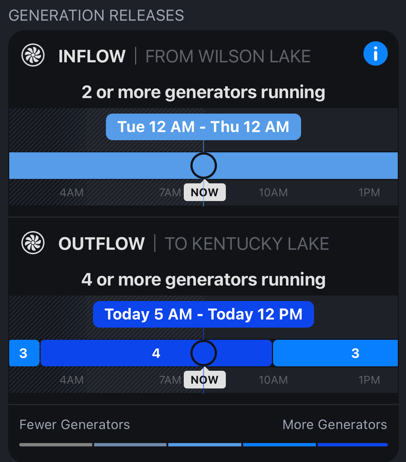
Deep Dive Pro Tip: Pickwick’s bass are heavily influenced by dam-generated currents. Use the Generation Releases to see when and where outflows push baitfish, focusing on river bends and points below the dam to maximize chances of targeting active fish.
Logan Martin Lake
Why It’s Popular: Logan Martin Lake covers roughly 15,000 acres on the Coosa River and is known for its clear water and rocky banks. Trophy largemouth are regularly caught, and anglers can also find crappie, catfish, and bluegill. The lake’s mix of rocky points, submerged timber, and deep humps creates distinct fishing opportunities. Its combination of structure and accessible public areas makes it a popular destination for both casual and tournament anglers.
Fish Species: Largemouth Bass, Crappie, Bluegill, Catfish
Seasonal Conditions: In spring, bass move onto rocky flats and timber edges to spawn, taking advantage of natural cover and shallow water. Summer drives fish to deeper humps, ledges, and offshore timber where water is cooler. Fall sees bass following baitfish along creek junctions and points, feeding heavily ahead of winter. Winter concentrates bass in deep pockets and stable flats where water clarity and temperature remain consistent, giving anglers predictable locations for targeting fish.
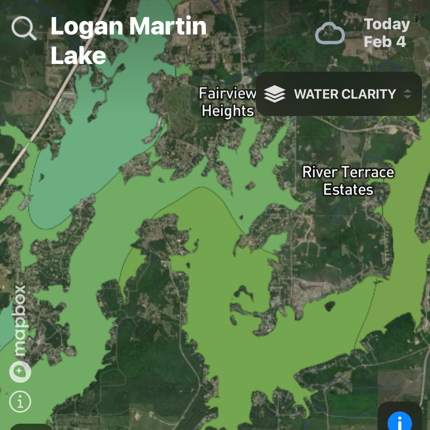
Deep Dive Pro Tip: Water clarity is critical on Logan Martin. Use the Water Clarity Map to identify where bass are holding: murky inflows often trigger aggressive, shallow strikes, while clear flats and timber edges favor natural-colored lures and precise depth control.
Lay Lake
Why It’s Popular: Lay Lake spans 12,000 acres and features multiple creek inflows, flats, and scattered timber. It consistently produces both strong numbers and trophy-sized bass, making it a go-to destination for serious anglers. Crappie, bluegill, and catfish provide additional fishing opportunities, giving it true multi-species appeal. Its network of creek channels, points, and inflows creates predictable feeding areas while still offering enough variety to challenge anglers throughout the year. The lake’s accessible public ramps and points make it easy for anglers of all experience levels to enjoy fishing.
Fish Species: Largemouth Bass, Crappie, Bluegill, Catfish
Seasonal Conditions: In spring, bass stage near creek points and inflows to prepare for spawning. Summer drives fish deeper into brush, timber, and main-lake channels to escape heat and pressure. Fall pushes bass along inflow edges and points where baitfish concentrate. Winter sees bass holding in deep creek arms and main-lake pockets, providing consistent patterns for anglers to exploit.
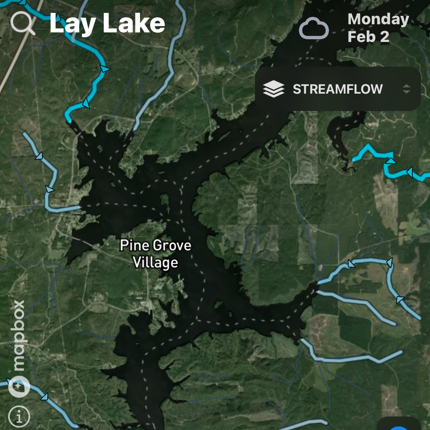
Deep Dive Pro Tip: Use the Streamflow map to pinpoint where moving water funnels baitfish. Target these concentrated feeding areas to stay ahead of active bass as seasonal conditions shift.
Wheeler Lake
Why It’s Popular: Wheeler Lake covers more than 68,000 acres, featuring shallow flats, long river sections, and deep tributaries that hold bass year-round. It consistently produces both numbers and trophy-quality largemouth, making it a top destination for serious anglers. Crappie, bluegill, and catfish add additional fishing opportunities, giving it true multi-species appeal. Its varied structure and accessible public ramps allow anglers of all experience levels to fish effectively across the lake.
Fish Species: Largemouth Bass, Spotted Bass, Crappie, Bluegill, Catfish
Seasonal Conditions: In spring, bass move onto flats and creek points for spawning. Summer pushes fish to deeper humps, shaded timber, and main-lake channels. Fall drives bass along creeks and points influenced by inflows, and winter sees fish holding in deep river channels and pockets where water remains stable, providing predictable fishing patterns.
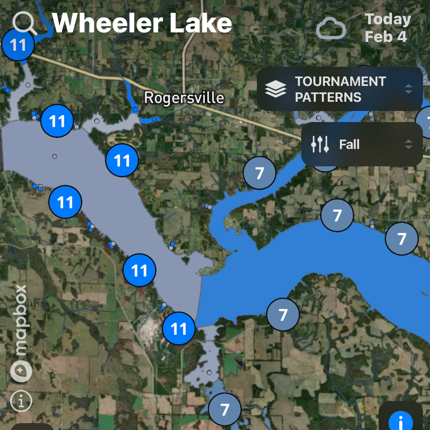
Deep Dive Pro Tip: Wheeler’s tournament history makes the Tournament Patterns map invaluable. Focus on proven areas for each season to maximize efficiency and success, targeting shallow points in spring, deeper humps in summer, and main-lake pockets in winter.
Plan Smarter Trips with Deep Dive
Make the most of your time on the water with Deep Dive. Trusted by professional tournament anglers, Deep Dive gives you the insights and strategies to fish smarter and catch more, no matter the lake or season.
- Proven Strategies: Use real patterns from professional tournament wins. Deep Dive analyzes millions of data points to show which baits and techniques perform best under current seasonal and water conditions.
- Find the Best Spots: Advanced map layers highlight lake sections, inflows, water clarity, and proven hotspots, letting you skip unproductive water before you ever make a cast.
- Real-Time Weather & Forecasts: Seven-day fishing forecasts, bite windows, barometric pressure trends, and major/minor feeding times help you know exactly when to be on the water.
Ready to master your lake?