Best Bass Fishing Lakes in Tennessee

Tennessee is home to some of the best freshwater fishing in the country. Between the massive TVA river lakes, deep mountain reservoirs, and winding creek-fed waters, there is a perfect spot for every angler. Whether you are after trophy largemouth, smallmouth, or spotted bass, Tennessee’s lakes offer world-class action all year long. The state’s diverse geography allows for everything from ledge fishing on the Tennessee River to deep-water finesse tactics in the eastern highlands.
Because these waters are managed for power generation and flood control, factors like current, water levels, and clarity change daily. Staying on the fish requires a plan that adapts to these shifting conditions across thousands of acres of surface water.
In this guide, we break down five legendary Tennessee lakes and show you how to use Deep Dive’s map layers to eliminate unproductive water and find the best spots faster.
Top 5 Lakes to Fish in Tennessee
Chickamauga Lake
Why It’s Popular: If you are looking for big bass in Tennessee, Chickamauga is the place to start. This 36,000-acre section of the Tennessee River is famous for producing "double-digit" largemouth bass. Because it is part of the TVA river system, the water is almost always moving, which keeps the fish active and healthy.
The lake is a mix of deep river channels, winding creek arms, and shallow grass flats. This variety means there is always a place to fish, but it also means the bass can be spread out. Whether you are targeting trophy largemouth, smallmouth, or spotted bass, Chickamauga is a high-pressure lake where the fish see a lot of lures. To be successful here, you have to understand how the current and the seasons move the fish from the deep main channel into the shallow backwaters.
Fish Species: Largemouth Bass, Spotted Bass, Crappie, Bluegill, Catfish
Seasonal Conditions:
- Spring: As the water warms, bass leave the deep river and move toward creek mouths and shallow flats. Rising water levels push baitfish into the back of creeks, creating great feeding spots. Look for shallow points where the current breaks—this is where bass wait to catch a meal before they spawn.
- Summer: To beat the heat, bass move back to deeper water. Look for them along the main river "ledges" (underwater drops), humps, and shaded timber. In the early morning, you can find great topwater action on shallow flats where the wind is blowing bait toward the shore.
- Fall: When the water cools, bass start chasing schools of shad. They move out of the deep channels and head toward creek mouths and shallow timber. Focus on areas where the wind is pushing water against the bank; if you find the bait, you’ll find the bass.
- Winter: Bass slow down and hold in deep, stable areas like main river channels. The "tailwaters" (the area right below the dam) are also great because the moving water stays a bit warmer. Slow presentations like jigs or "Alabama Rigs" are the best way to catch these cold-water fish.
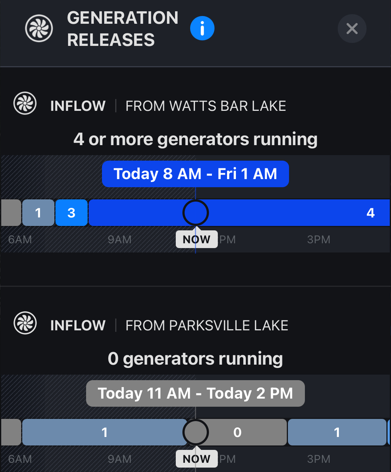
Deep Dive Pro Tip: On Chickamauga, the current is like a dinner bell. When the TVA starts moving water through the dam, it pulls baitfish across the river ledges, triggering a feeding frenzy. Use the Generation Releases tool in the app to see exactly when the turbines start. Experienced anglers often wait for this flow to begin before hitting their best spots, as the moving water is what usually triggers the biggest fish to eat.
J. Percy Priest Lake
Why It’s Popular: Spanning 14,200 acres just outside Nashville, J. Percy Priest is one of the busiest and most productive lakes in the state. Unlike the wide-open river lakes, Priest is full of winding creek arms, limestone rock bluffs, and scattered timber. It is a favorite for local anglers because it offers a great mix of largemouth, smallmouth, and spotted bass—plus some of the best crappie and hybrid striped bass fishing around.
Because it’s so close to the city, the fish here see a lot of boats. Success on Priest often comes down to timing the water movement from the dam and finding the right rocky transitions where bass like to hide.
Fish Species: Largemouth Bass, Spotted Bass, Crappie, Bluegill, Catfish
Seasonal Conditions:
- Spring: Bass move toward warming creek mouths and shallow rocky points to get ready for spawning. If there has been recent rain, the moving water in the creeks will bring in baitfish, making these prime spots for topwater lures and shallow crankbaits.
- Summer: When the temperature rises, fish head for deeper water. Look for them around underwater rock ledges, deep timber pockets, and humps in the middle of the lake. Early morning is the best time to fish shallow flats before the sun gets too high and the boat traffic picks up.
- Fall: As the water cools, bass follow schools of shad toward the back of creeks and onto wind-blown points. They become much more aggressive this time of year. Look for areas where the wind is pushing water against the shore, as this traps baitfish and triggers a feeding frenzy.
- Winter: Bass settle into deep, stable areas like the main lake channels and near the dam. They don't move much in the cold, so you’ll want to fish slowly. Target deep rock piles and channel edges using jigs or drop-shots to get a bite.
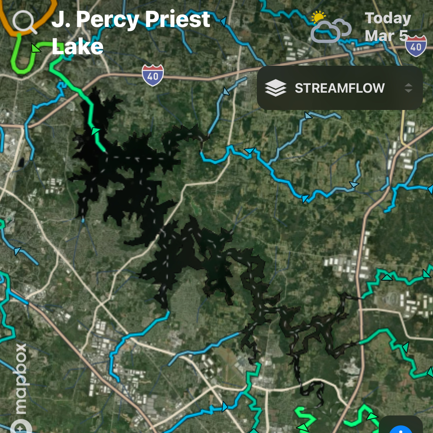
Deep Dive Pro Tip: J. Percy Priest is heavily affected by water coming in from the Stones River and water leaving through the dam. Use the Streamflow Map to see how the water is moving. This helps you find "current seams"—spots where the moving water meets still water—which are the most predictable places to find active bass.
Old Hickory Lake
Why It’s Popular: Old Hickory Lake covers 22,500 acres of the Cumberland River and is a completely different animal than the deep highland reservoirs. This lake is known for its shallow, "wood-infested" backwaters and, more importantly, its abundance of aquatic grass. It is one of the best places in Tennessee to catch a heavy bag of largemouth bass, with plenty of striped bass, crappie, and catfish to keep things interesting.
Old Hickory is essentially a wide river, and the current is the boss here. The fish are used to moving water, and the best fishing usually happens when the dams are pushing current through the system. If you like "power fishing"—throwing spinnerbaits, chatterbaits, and frogs—this is your lake.
Fish Species: Largemouth Bass, Spotted Bass, Crappie, Bluegill, Catfish
Seasonal Conditions:
- Spring: This is "big fish" season on Old Hickory. Bass move into the shallow, grassy coves and secondary points to spawn. Focus on the mouths of creeks and shallow flats with submerged wood. If the water is stained from spring rains, don't be afraid to use bright colors like chartreuse to help the fish find your bait.
- Summer: As the sun gets hot, the grass becomes the most important cover on the lake. Bass will bury themselves in "Coontail" or lily pads to stay cool and find oxygen. Focus on the edges of grass mats near the main river channel where the current can bring them food. Early morning topwater fishing over the grass is a local favorite.
- Fall: When the water cools, the bass leave the thick summer grass and follow shad into the creeks. This is a great time to cover water with a squarebill crankbait or a spinnerbait. Look for "wind-blown" banks—the wind pushes the baitfish against the shore, and the bass won't be far behind.
- Winter: Everything slows down. Bass group up in the deeper creek channels or along the main river bluffs. Rocky banks are key in the winter because the rocks soak up the sun and warm the water just a few degrees. Slow-rolling an Alabama Rig or working a jig through deeper wood is the most consistent way to get a bite.
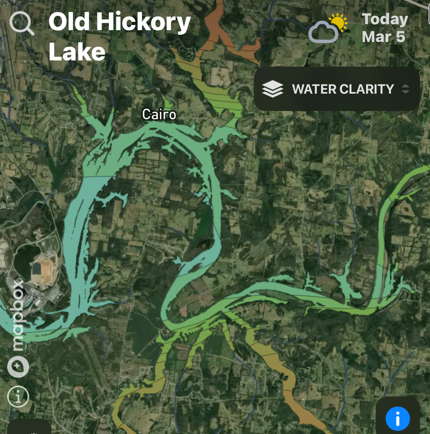
Deep Dive Pro Tip: Old Hickory is famous for having "stained" water in some areas and clear water in others, especially after a big rain. The Water Clarity Map is a game-changer here. It helps you find the "cleaner" water that bass prefer for hunting, or identifies the stained areas where you can use louder, more aggressive lures. Knowing the visibility before you launch saves you hours of driving around looking for the right water.
Watts Bar Lake
Why It’s Popular: Located between Knoxville and Chattanooga, Watts Bar Lake is a hidden gem that covers 39,000 acres of the Tennessee River. It is often called the "lake of many islands" because of the countless small islands and sandbars scattered throughout its waters. This lake is unique because it offers some of the best smallmouth bass fishing in the Tennessee River system, alongside heavy-hitting largemouth and spotted bass.
Because Watts Bar is less crowded than its neighbors, the fish aren't as "picky," but the lake is massive. The key to success here is understanding how the wind and the river current interact with the islands and wide-open flats.
Fish Species: Largemouth Bass, Spotted Bass, Crappie, Bluegill, Catfish
Seasonal Conditions:
- Spring: As the water reaches the 60s, bass move toward the islands and shallow rocky banks. Smallmouth especially love the gravel points and rocky transitions. Look for areas where "pea gravel" meets larger rocks—this is where they like to spawn. Spinnerbaits and shallow crankbaits are great for covering water.
- Summer: When the heat hits, the "ledge" fishing begins. Bass move to the deep river channel edges and underwater humps. Because there are so many islands, the current creates "eddies" (pockets of calm water) behind them. Bass sit in these calm spots waiting for the current to wash food right to them.
- Fall: This is one of the best times to fish Watts Bar. As the water cools, bass follow schools of shad into the "embayments" (large coves) and back toward the creeks. If you can find isolated patches of underwater grass (like milfoil), you will almost certainly find bass hiding there.
- Winter: The fish move to the lower end of the lake near the dam or hold deep on main-lake bluffs. The water here stays clearer than other river lakes, so finesse tactics like a "float-and-fly" or a small hair jig work wonders for big winter smallmouth.
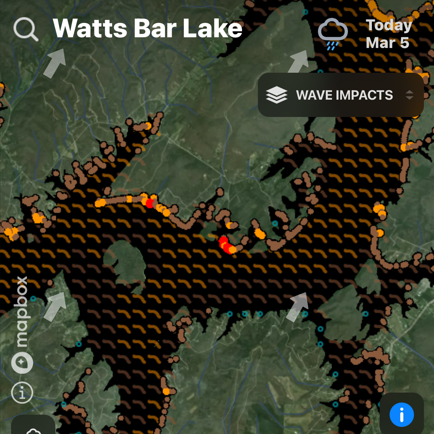
Deep Dive Pro Tip: Watts Bar has huge sections of open water where the wind can really kick up. The Wave Impacts Map is incredibly helpful here. It shows you exactly where the wind is pushing water against a bank—which often "turns on" the bite—and where you can find calm, protected water if the lake gets too rough. By knowing which banks are being hit by waves, you can target active, feeding fish that are using the churned-up water to hunt.
Douglas Lake
Why It’s Popular: Douglas Lake is a 30,000-acre "bass factory" in the foothills of the Great Smoky Mountains. It is famous for high numbers of bass, but it’s a unique challenge because it is a flood-control reservoir. The water level here changes more than almost anywhere else in Tennessee—dropping as much as 60 feet in the winter and rising quickly after mountain rains.
When the water is high, bass hide deep in flooded bushes and timber. When the TVA pulls the water down, those hiding spots disappear, and the fish are forced onto steep rocky points and deep river channels. If you can keep up with the water levels, the fishing is world-class.
Fish Species: Largemouth Bass, Spotted Bass, Crappie, Bluegill, Channel Catfish
Seasonal Conditions:
- Spring: Bass stage along creek mouths, shallow flats, and timber edges as water warms. TVA inflows and rising water push baitfish into creek arms and pockets, concentrating feeding zones. Focus on flats adjacent to current breaks where bass ambush prey before moving to spawn.
- Summer: Fish retreat to deeper main-lake channels, humps, and shaded timber to escape heat. Generation releases create currents that funnel baitfish toward points, mid-lake flats, and creek junctions, producing active feeding corridors. Early morning and late evening topwater action is strongest along shallow flats and creek arms.
- Fall: Cooler water and stable TVA flows push bass along rocky points, creek junctions, and wind-affected flats. Feeding is aggressive where wind and current converge, funneling baitfish into predictable ambush areas near main-lake channel edges.
- Winter: Bass suspend in deep pockets, main-lake channels, and behind humps where temperatures remain stable. TVA flow patterns continue to concentrate baitfish along deep flats and near submerged structure, making vertical jigging and crankbait presentations effective.
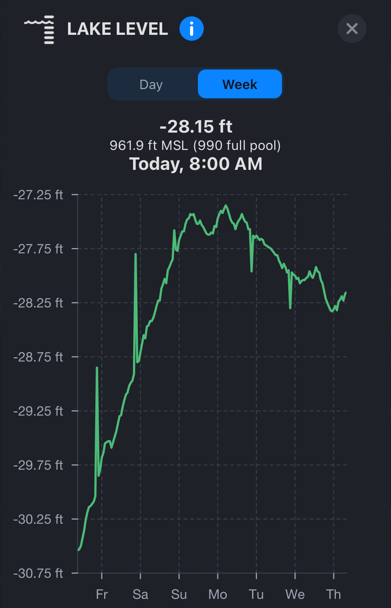
Deep Dive Pro Tip: On Douglas, the "perfect spot" changes every day. The Lake Level tool is your most important asset here. It tracks the water elevation so you know exactly which cover—like bushes or rock piles—is actually underwater. Knowing the water level prevents you from wasting time fishing over dry land or empty water.
Let Deep Dive be your guide on the water
Take the guesswork out of your next trip with Deep Dive. Access the elite tournament data required to build a strategic plan, so you can spend less time searching and more time catching.
- Proven Strategies: Leveraging real patterns from professional tournament wins. Deep Dive pulls from over a million data points to show you the exact patterns and techniques that work for your lake’s current conditions.
- Find the Best Spots: Use our map layers to break down the lake before you ever launch. See water inflows, wind-blown banks, water clarity and more so you can skip the dead water and head straight to high percentage areas.
- Real-Time Weather & Forecast: Know exactly when the bite is going to turn on. Get 7-day forecasts with bite windows, pressure trends, and feeding times so you’re always in the right place at the right time.